--Thomas Szasz, writing in 1979
Showing posts with label Thomas Szasz. Show all posts
Showing posts with label Thomas Szasz. Show all posts
Monday, July 01, 2024
Why Limit Trans to Sex?
"The 'transsexual male' [that is, transgender woman--SR] is indistinguishable from other males, save by his desire to be a woman.... If such a desire qualifies as a disease, transforming the desiring agent into a 'transsexual,' then the old person who wants to be young is a 'transchronological,' the poor person who wants to be rich is a 'transeconomical,' and so on and on."


Friday, April 19, 2024
TGIF: Thomas Szasz - Unappreciated Libertarian
 |
| R-L: Thomas Szasz, Raico Raico, Me |
I maintain that mental illness is a metaphorical disease: that bodily illness stands in the same relation to mental illness as a defective television set stands to a bad television program.
There is no psychology; there is only biography and autobiography.
--Thomas Szasz (1920-2012)
Monday, April 15, was the 104th birthday of Thomas Szasz, the late great debunker of the system of social control perpetrated, in cahoots with the state, by institutional psychiatry, the mental-health establishment. That system has included among its methods lobotomy, electroshock, involuntary "hospitalization" (a "crime against humanity"), outpatient commitment, forced "medication," and other means. For Szasz, who excelled at exposing how scientific language is often used to subjugate, forced hospitalization, treatment, and medication were in fact imprisonment, torture, and poisoning.
Szasz's soft accented voice was powerful because he had credentials: he was a medical doctor, psychiatrist, practicing psychotherapist (for consenting clients only), and professor of psychiatry at the State University of New York Upstate Medical University in Syracuse. He knew from the inside what he was talking about.
Born in Budapest, Hungary, he came to America in 1938 at age 18. He adored America's founding principles, which proclaimed the natural right to life, liberty, and the pursuit of happiness. He was a libertarian, favoring private property and free enterprise. He loved autonomy and self-responsibility. As a result, he fought tirelessly against the government-medical complex and its persecution of people who, though perhaps disturbing to others and even themselves, had violated no one's rights.
I knew Tom Szasz. He wrote a column for The Freeman (Foundation for Economic Education) during my 15 years as the editor. Working with him was a great honor, not to mention a great pleasure. He was unique. He was wise.
Szasz (pronounced like the first syllable in Saskatchewan) wrote dozens of books and hundreds of articles and kept writing practically to the end of his long life. He made his first big splash with a radical book, The Myth of Mental Illness: Foundations of a Theory of Personal Conduct (1961), which people should read regardless of their interest in psychiatry. This book and the work that followed got him routinely denounced by the government-medical establishment. Ironically, "experts" said he was crazy and called for his firing from his university. Call it an early attempt at cancellation. Why? Because Szasz disturbed the peace. Later, people acknowledged his contributions, perhaps because he had exposed the worst psychiatric abuses, such as the warehousing called hospitalization. He even won awards. But his view of human behavior has not yet won the day.
By "myth" Szasz meant that mental illness is a metaphor that is unfortunately taken literally. He wrote, "Typhoid fever is a disease. Spring fever is not a disease; it is a figure of speech, a metaphoric disease. All mental diseases are metaphoric diseases...." He did not deny that people can behave oddly, annoyingly, disturbingly, and even threateningly. But he denied that behavior was disease: "In asserting that there is no such thing as mental illness, I do not deny that people have problems coping with life and each other." They may need many things, but physicians and psychiatrists are not among them.
Nor did he deny that people can suffer from brain disease or that currently unknown brain diseases could be discovered in the future. Again, he meant that disapproved or immoral behavior is human action not illness: it has reasons, motives, purposes, and stories -- not causes, as we observe in nature. "There is no psychology," Szasz aphorized. "There is only biography and autobiography." What's more, if all mental illnesses were brain diseases, Szasz asked, why would we need psychiatrists? We have neurologists already. Moreover, people with real brain diseases, like other physical diseases, are free to reject treatment. Ergo...
He was fond of philosopher Gilbert Ryle's insight about myths in The Concept of Mind: "A myth is, of course, not a fairy story. It is the presentation of facts belonging to one category in the idioms belonging to another. To explode a myth is accordingly not to deny the facts but to re-allocate them." That's Tom's approach.
Thus when people asked Szasz if he was saying that no one was crazy, he'd say something like, "I didn't say no one was crazy. I said no one was mentally ill." Of course, if there is no mental illness, then there is no mental health either. Health and illness have historically referred to the body, he said. The "mind," however, is not a literal organ; it's a metaphorical organ. How can it be ill? Pathologists find no mental illnesses when they do autopsies.
By the way, his book The Meaning of Mind: Language, Morality, and Neuroscience is a gem. Spoiler: "Mind is a verb." In other words, mind is not something we have, but something we do. We aren't robots, as some neuroscientists think; we are minders -- conscious and self-conscious beings who mind. We say, "Mind your own business" and "Mind your manners." Szasz taught us to mind our metaphors.
The connection to freedom and libertarianism, if not already obvious, becomes clear when we see that instead of being about controlling disease, psychiatry is about controlling behavior that someone else finds objectionable, for good or bad reasons. Aggression, he said, is properly handled by the criminal justice system. As he wrote in concluding The Myth:
Psychiatrists ... [in] actual practice ... deal with personal, social, and ethical problems in living.... [Emphasis added.]
Human behavior is fundamentally moral behavior. Attempts to describe and alter such behavior without, at the same time, coming to grips with the issue of ethical values are therefore doomed to failure.
Szasz viewed many issues through this lens. He wrote two books defending the freedom to take recreational drugs and to self-medicate without a doctor's permission (prescription): Ceremonial Chemistry: The Ritual Persecution of Drugs, Addicts, and Pushers and Our Right to Drugs: The Case for a Free Market. Addiction -- although perhaps a bad habit that takes great effort to break -- is not a disease. Nor were any of the other "addictions": gambling, shopping, sex, you name it. He also published two books on the right to commit suicide.
From the start Szasz opposed psychiatry's regarding homosexuality as a mental illness properly subject to forcible "treatment" and called for full recognition of the individual rights of gay men and lesbians. In the 1970s the American Psychiatric Association board finally voted to stop classifying homosexuality as a mental illness. In real medicine, Szasz pointed out, physicians do not vote on what is and is not an illness. That tells you something.
He also spoke out against the insanity defense in criminal trials. Criminals are human beings, he said, who should be judged morally and held accountable for their actions.
His life's mission was to battle for liberty and self-responsibility by discrediting what he called the "therapeutic state." He thus fought courageously against the "medicalization of everyday life," that is, the recasting of human freedom, choice, and action as medical, not moral, concerns and in the case of disapproved choices and actions, as diseases. F. A. Hayek, whom Szasz admired, called the misapplication of science to areas outside its province scientism. As Szasz put it, "Mental illness is a myth, whose function is to disguise and thus render more palatable the bitter pill of moral conflicts in human relations."
I thought about Szasz often during the pandemic and the government's "science-based" restrictions on liberty. What exactly would he have been saying? I am certain of two things.
First, he would have insisted that physicians and scientists are not qualified to tell us what trade-offs we should make between liberty and health. That's not a medical or scientific issue, but a moral one that should be left to each individual. Advice, if requested, is one thing. Colluding with the state to violate liberty is something else.
Second, he would have condemned all government and scientific attempts to quash public debate about what COVID-19 was, where it came from, and what to do about it. He loved John Stuart Mill's On Liberty and its plea for freedom of speech.
His magnum opus is Insanity: The Idea and Its Consequences, which I recommend. Highly readable and entertaining, it covers much of what he had to say over the years and responds to critics. He also published several collections of wise aphorisms, a form in which he was brilliant. Samples: "The proverb warns that 'You should not bite the hand that feeds you.' But maybe you should, if it prevents you from feeding yourself." And: "A child becomes an adult when he realizes that he has a right not only to be right but also to be wrong." You will learn from his aphorism alone.
I especially want to draw attention to Szasz's 2004 book, Faith in Freedom: Libertarian Principles and Psychiatric Practices, in which he argued that the freedom philosophy is incompatible with psychiatry as we know it. Besides chapters on that theme, he also has chapters on particular libertarians and civil libertarians: Ludwig von Mises, F. A Hayek, Murray Rothbard, Robert Nozick, Julian Simon, Deirdre McCloskey, Ayn Rand, Nathaniel Branden, Bertrand Russell, John Stuart Mill, and the American Civil Liberties Union. His analysis is at times critical because libertarians have too often failed to apply the nonaggression principle (obligation) to those whom state-deputized psychiatrists have declared mentally ill. The chapter "Economics and Psychiatry: Twin Scientisms" is pathbreaking. In the Preface, he wrote:
I believe that involuntary psychiatry [like chattel slavery] is -- regardless of any good in it, real or attributed -- immoral and illegitimate. The proper response to the outrage of psychiatric slavery is abolition, not reform.
I contend that this position is not merely consistent with the basic philosophy of libertarianism but inherent in it. Unfortunately, liberty is something for which everyone regards himself as fit, but most people regard certain other persons or the members of certain groups as unfit. In the past, among the unfit were blacks, women, Jews, and "perverts" such as homosexuals. Today the persons most often considered unfit for liberty are the mentally ill.
Thomas Szasz is definitely someone whom libertarians ought to check out.
In the meantime, see my article "Szasz in One Lesson" and my 2005 video interview with Tom on YouTube. And visit Jeffrey Schaler's Thomas S. Szasz Cybercenter for Liberty and Responsibility for many articles by and about him.
Monday, April 15, 2024
Thomas Szasz: Champion of Freedom

Today is the 104th anniversary of the birth of Thomas Szasz (1920-2012), the great if unappreciated libertarian and defender of individual autonomy and dignity. A psychiatrist by profession, for over 50 years, Szasz was the foremost critic of the social-control system we call institutional psychiatry, or what we could call the government-medical complex. He called it the Therapeutic State. He opposed involuntary mental hospitalization, forced medication, the insanity defense, prescription laws, drug prohibition, laws against suicide, and the psychiatric position (until the 1970s) that homosexuality was a mental illness requiring forced intervention. I am proud to have had him as a friend and also a columnist when I edited The Freeman. He was a delightful man. His books include The Myth of Mental Illness, Insanity: The Idea and Its Consequences, Our Right to Drugs, The Manufacture of Madness, and Faith in Freedom. He also published several collections of wonderful aphorisms.
I wrote the following about 20 years ago to summarize a good deal of what Thomas Szasz said in his dozens of books and hundreds of articles. I call it "Szasz in One Lesson":
If neuroscientists discovered that mass murderers and people who claim to be Jesus had different brain chemistries from other people, most everyone would accept this as evidence that they suffered from a mental illness/brain disorder (MI/BD).
If neuroscientists discovered that homosexuals had different brain chemistries from heterosexuals, far fewer people would accept this as evidence that they suffered from a MI/BD.
If neuroscientists discovered that nuns had different brain chemistries from everyone else, very few people would accept this as evidence that they suffered from a MI/BD.
If neuroscientists discovered that married men had different brain chemistries from bachelors, no one would accept this as evidence that they suffered from a MI/BD.
Clearly, a difference in brain chemistry per se is not enough to make people believe that someone has a MI/BD. It takes more. Why, then, would a difference in one case be taken as evidence of MI/BD, while a difference in another case would not be? The obvious answer is that people, including psychiatrists, are willing to attribute behavior to mental illness/brain disorder to the extent that they disapprove of that behavior, and are unwilling to do so to the extent they approve of, or at least are willing to tolerate, that behavior. (Psychiatry once held that homosexuality was a mental illness. That position was changed, but not on the basis of scientific findings. Science had nothing to do with the initial position either.)
In other words, the psychiatric worldview rests, not on science or medicine, as its practitioners would have us believe, but on ethics, politics, and religion. That would be objectionable only intellectually if that were as far as it went. Unfortunately, it goes further, since the practitioners and the legal system they helped shape are empowered:
• first, to involuntarily “hospitalize” and drug people “diagnosed” as mentally ill and thought possibly to be dangerous to themselves or others, and
• second, to excuse certain people of responsibility for their actions (for example, via the insanity defense).
Postscript: I'm often asked which one of Thomas Szasz's two dozen books I'd recommend to someone unfamiliar with his work. I suggest Insanity: The Idea and Its Consequences. This highly readable book covers most of his views on psychiatry, mental illness, and the Therapeutic State, with responses to his critics along the way. Of course, after that, you'll want to read the rest.
Post postscript: More on Thomas Szasz to come. Meanwhile, see my 2005 interview with Szasz.
Wednesday, April 15, 2020
The Szasz Centennary
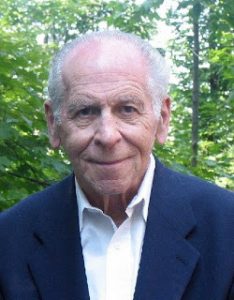
In this cause, Szasz, who was also a historian and philosopher, not only documented the many ways in which the so-called mentally ill have been persecuted, imprisoned (involuntarily hospitalized), and tortured (drugged, lobotomized, electroshocked, etc.), he also demolished the establishment's case for the oppression and so-called "treatment" of recreational drug consumers, sellers, and manufacturers; homosexuals; would-be suicides; and other officially disapproved persons. No one was better at exposing the horror of the "war on drugs" -- it's a war on people not drugs, of course -- than Szasz. And keep in mind that when he defended the liberty of gays and lesbians, psychiatry still listed homosexuality as a mental illness. (Organized psychiatry voted [sic] it off the list in the 1970s.)
Most relevant to the world today, Szasz insisted on the traditional liberal distinction between personal health and public health, specifically, between conditions that may be harmful only to oneself and conditions that may be harmful to others, such as through a serious, contagious disease. He objected to the illiberal blurring of that line, which has justified interventions against people who have not harmed others and could not do so by, say, breathing on them. No one, Szasz wrote, has the right to declare someone else a patient -- whether sick or not -- against his will.
Many libertarians have ignored Szasz, who was my friend and mentor, because they have regarded psychiatry as beyond their expertise. But they missed the point. Szasz insisted that libertarian principles pertain even to people who are stigmatized by the medical establishment, which has long been deputized by the state. Until someone threatens to harm or actually harms another person, the state should leave him alone.
Pick up any book by Szasz, including his collections of aphorisms, and you'll profit immensely. He was a wonderful writer and a fascinating thinker. You can find a list of his writings here. Lots more information is available at the Thomas S. Szasz Cybercenter for Liberty and Responsibility. See my post "Szasz in One Lesson" here. Other posts that I've written over the years are here, here, and here. Also see Jacob Sullum's interview here and Jim Bovard's appreciation here.
And the biggest treat of all is this video interview I did with Tom in 2005.
Friday, February 15, 2019
TGIF: Who Owns You?
 |
| Thomas Szasz (1920-2012) |
Many people have legitimate complaints against the Food and Drug Administration. For example, during its long history, the FDA has delayed the marketing of badly needed drugs and medical devices, leading to unnecessary pain and death. Excessive bureaucratic requirements for testing have made drugs more expensive than they would have been otherwise. And, as I’ve detailed elsewhere, its regulation of tobacco and nicotine interferes with people’s enjoyment of those products.
I want to suggest, however, such isolated complaints fail to go to the heart of the matter.
Read TGIF at The Libertarian Institute.
TGIF -- The Goal Is Freedom -- appears Fridays. Sheldon Richman, author of America's Counter-Revolution: The Constitution Revisited, keeps the blog Free Association and is executive editor of The Libertarian Institute. He is also a senior fellow and chair of the trustees of the Center for a Stateless Society and a contributing editor at Antiwar.com.
Sunday, April 15, 2018
Thomas Szasz: An Appreciation

Szasz burst on the scene nearly 60 years ago with his pathbreaking book, The Myth of Mental Illness, which argued that the mind, not being an organ, cannot be diseased; thus the term "mental illness" is a category mistake. What is stigmatized by that "diagnosis" is the "patient's" behavior that disturbs someone else. The switch from "mental illness" to "brain disorder" did not change the fact that what is typically bothersome is behavior (which may indeed be objectionable and even coercive). The attribution of such behavior to a brain state is an unproven and even unprovable inference. Human action has reasons, not causes, Szasz would say.
At Amazon.com you'll find a cornucopia of books demolishing the case for the state's deputization of physicians, particularly psychiatrists. A good book to start with is Insanity: The Idea and Its Consequences, his magnum opus. You should also search his name at FEE.org for the columns he wrote while I edited The Freeman.
Meanwhile, to get a sense of what Szasz was about at the deepest level, see my "Szasz in One Lesson" and watch this interview I did with him.
Tuesday, May 26, 2015
John Nash, RIP
Updated May 29, 2015
John Nash, the mathematician who won the Nobel Prize in economics and who was the subject of the 2001 Academy Award-winning biopic A Beautiful Mind, died last week along with his wife in a car crash. As editor of The Freeman, I published two articles on Nash and the movie based on the biography by Sylvia Nasar, in August 2002, one by Sandy Ikeda, "A Beautiful Movie, Lousy Economics," and one of my own, "Was the Beautiful Mind Sick?," which I reproduce below.
John Nash, the mathematician who won the Nobel Prize in economics and who was the subject of the 2001 Academy Award-winning biopic A Beautiful Mind, died last week along with his wife in a car crash. As editor of The Freeman, I published two articles on Nash and the movie based on the biography by Sylvia Nasar, in August 2002, one by Sandy Ikeda, "A Beautiful Movie, Lousy Economics," and one of my own, "Was the Beautiful Mind Sick?," which I reproduce below.
Thursday, December 04, 2014
Nathaniel Branden, 1930-2014
Nathaniel Branden, Ayn Rand's original partner in the Objectivist movement, died December 3. Branden was a complicated man, a big mixture of virtue and vice. I may write more about him later but for now, I will just say that I am thankful that I did not discover Objectivism until just after the Rand-Branden split occurred in 1968.
Here's Brian Doherty's obituary for Branden.
In 2006 I published "Szasz and Rand" in the Journal of Ayn Rand Studies (unfortunately not online), a review essay of Szasz's Faith in Freedom, which contains critical chapters on Rand and Branden.
Here's Brian Doherty's obituary for Branden.
In 2006 I published "Szasz and Rand" in the Journal of Ayn Rand Studies (unfortunately not online), a review essay of Szasz's Faith in Freedom, which contains critical chapters on Rand and Branden.
Monday, May 26, 2014
Magic
Are we so desperate for explanations of horrific acts like Elliot Rodger's murder spree that we are willing to accept scientistic pseudo-explanations? Saying that Rodger killed because he was mentally ill is like saying David Copperfield can make things disappear and reappear because he has magical powers. It explains nothing, though it appears to. It's a placeholder where a real explanation should be. A sign of growing up is the rejection of pseudo-explanations and the demand for the real thing.
Behavior has reasons not causes. Persons are not reducible to brain chemistry.
This is what the late Thomas Szasz spent years courageously trying to explain to us. He was routinely misunderstood, misstated, and maligned. Contrary to common misconception, Szasz did not deny that people do "crazy" things, only that action -- purposive conduct -- is illness. He did not rule out that some people who do "crazy" things may have brain illnesses, even ones yet to be discovered. But he rejected "mental illness" as a category mistake because the mind is not an organ. ("Mind is a verb not a noun," he he once told me.) He liked this passage from the philosopher Gilbert Ryle in The Concept of Mind:
If you want to see what Szasz had to say, you can start with The Medicalization of Everyday Life: Selected Essays, The Manufacture of Madness: A Comparative Study of the Inquisition and the Mental Health Movement, or Psychiatry: The Science of Lies. If you want to get in more deeply, I recommend Insanity: The Idea and Its Consequences, Schizophrenia: The Sacred Symbol of Psychiatry, and the book that started it all, The Myth of Mental Illness: Foundations of a Theory of Personal Conduct.
Behavior has reasons not causes. Persons are not reducible to brain chemistry.
This is what the late Thomas Szasz spent years courageously trying to explain to us. He was routinely misunderstood, misstated, and maligned. Contrary to common misconception, Szasz did not deny that people do "crazy" things, only that action -- purposive conduct -- is illness. He did not rule out that some people who do "crazy" things may have brain illnesses, even ones yet to be discovered. But he rejected "mental illness" as a category mistake because the mind is not an organ. ("Mind is a verb not a noun," he he once told me.) He liked this passage from the philosopher Gilbert Ryle in The Concept of Mind:
A myth is, of course, not a fairy story. It is the presentation of facts belonging to one category in the idioms belonging to another. To explode a myth is accordingly not to deny the facts but to re-allocate them.Szasz spent his life restoring the facts of human action to the category in which they belong. For an unlimited number of reasons, people are capable of drawing conclusions about the world and themselves that in their view justify evil actions. To say they are sick is to tell us nothing about them, although it tell us much about the speaker, who seeks comfort and security, not understanding. The obvious danger in this is that proposals to prevent mass murder by the "mentally ill" will lead to greater violations of the civil liberties of people who are no threat to anyone. (Involuntary "medication" and "hospitalization" are common in the land of the free.)
If you want to see what Szasz had to say, you can start with The Medicalization of Everyday Life: Selected Essays, The Manufacture of Madness: A Comparative Study of the Inquisition and the Mental Health Movement, or Psychiatry: The Science of Lies. If you want to get in more deeply, I recommend Insanity: The Idea and Its Consequences, Schizophrenia: The Sacred Symbol of Psychiatry, and the book that started it all, The Myth of Mental Illness: Foundations of a Theory of Personal Conduct.
Monday, July 08, 2013
TGIF: Airbrushing Barbarity
In "Airbrushing Barbarity" I explore the insidious practice of discussing public policy in value-free terms.
Monday, September 24, 2012
My Interview with Thomas Szasz
In the summer of 2005 I traveled to Thomas Szasz's home in Manlius, New York, and videoed an interview with the great critic of coercive psychiatry and the "therapeutic state."
Wednesday, September 12, 2012
Tom Szasz: Dialectical Libertarian

Simple. He knew that electroshock was far more likely to be used on people against their will. In the unlikely case that someone wanted it, he or she could go to a neighboring community. The net result of a ban would be that no one could be subjected to that barbaric procedure against his or her will within the borders of Berkeley. Hence it was a clear-cut victory for freedom.
Tuesday, September 11, 2012
Szasz on Mind
Some years ago, when Tom Szasz told me he was writing a book on "the mind," I asked him to sum it up in one sentence.
"Mind," he said, "is a verb not a noun."
Thomas Szasz and the Nature of Myth
Thomas Szasz's best-known book is The Myth of Mental Illness, which is widely misunderstood. That's because few people know what a myth is. Szasz approved of this quote from Gilbert Ryle (The Concept of Mind):
A myth is, of course, not a fairy story. It is the presentation of facts belonging to one category in the idioms belonging to another. To explode a myth is accordingly not to deny the facts but to re-allocate them.Tom spent his life patiently trying to explain that he was not denying facts, just re-allocating them. Most people stared bewildered.
Thomas Szasz, RIP

For now, see my "Szasz in One Lesson."
Also see Jacob Sullum's Reason interview.
Saturday, April 21, 2012
Sunday, April 15, 2012
Happy Birthday, Tom Szasz!

Today is Tom Szasz’s 92 birthday. I hope he’s having a great day with his family. Remarkably, Tom continues to publish a book a year. His awesome work is recommended to anyone who loves liberty. It's a mistake to think his work is fundamentally about psychiatry. Fundamentally it is about the necessary integration of freedom and self-responsibility -- and their enemy the state.
You can find a sample of his writings here. Some things I’ve written about Szasz include:
“Szasz in One Lesson”
“Szasz and Rand” (Journal of Ayn Rand Studies, pdf)
I'm proud to call this great man and great libertarian my friend!
Saturday, January 15, 2011
Who Are You Going to Believe: Me or Your Eyes?
Jared Lee Loughner's high-school girlfriend, Ashley Figueroa, told ABC News she does not think Loughner is mentally ill. ""I think he's faking everything," she said.
This prompted Salon.com to comment:
This prompted Salon.com to comment:
Figueroa is not a doctor, and these claims conflict with the opinion of top doctors in the field of psychiatry.Well, sure. I can't imagine why we would take more seriously the judgment of someone who actually knew him intimately not long ago over a bunch of self-serving psychiatrists who never even met him.
Thursday, January 13, 2011
Szasz in One Lesson
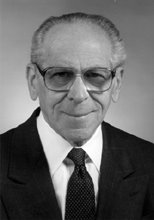 (First posted in 2006, and now amended. The relevance to the Tucson massacre is self-explanatory.)
This is something I came up with some time ago to summarize a good deal of what Thomas Szasz, a great libertarian and hero of mine, has been saying for half a century.
If neuroscientists discovered that mass murderers and people who claim to be Jesus had different brain chemistries from other people, most everyone would accept this as evidence that they suffered from a mental illness/brain disorder (MI/BD) and that this disorder caused their behavior.
If neuroscientists discovered that homosexuals had different brain chemistries from heterosexuals, far fewer people would accept this as evidence that they suffered from a MI/BD and that this disorder caused their behavior.
If neuroscientists discovered that nuns had different brain chemistries from everyone else, very few people would accept this as evidence that they suffered from a MI/BD and that this disorder caused their behavior.
If neuroscientists discovered that married men had different brain chemistries from bachelors, no one would accept this as evidence that they suffered from a MI/BD and that this disorder caused their behavior.
Clearly, a difference in brain chemistry per se is not enough to make people believe that someone has a MI/BD. It takes more. Why, then, would a difference in one case be taken as evidence of MI/BD, while a difference in another case would not be? The obvious answer is that people, including psychiatrists, are willing to attribute behavior to mental illness/brain disorder to the extent that they disapprove of that behavior, and are unwilling to do so to the extent they approve of, or at least are willing to tolerate, that behavior. (Psychiatry once held that homosexuality was a mental illness. That position was changed, but not on the basis of scientific findings. Science had nothing to do with the initial position either.)
In other words, the psychiatric worldview rests, not on science or medicine, as its practitioners would have us believe, but on ethics, politics, and religion. That would be objectionable only intellectually if that were as far as it went. Unfortunately, it goes further, since the practitioners and the legal system they helped shape are empowered:
• First, to involuntarily “hospitalize” and drug people “diagnosed” as mentally ill and thought possibly to be dangerous to themselves or others, and
• Second, to excuse certain people of responsibility for their actions (for example, via the insanity defense).
Postscript: I'm often asked which one of Thomas Szasz's two dozen books I'd recommend to someone unfamiliar with his work. I suggest Insanity: The Idea and Its Consequences. This highly readable book covers most of his views on psychiatry, mental illness, and the Therapeutic State, with responses to his critics along the way. Of course, after that, you'll want to read the rest.
The Dangerous Aftermath
We should be concerned that in the wake of the massacre the usual voices are calling for a beefed-up mental-health system, which means it would be easier for government to lock people up in "facilities" and drug them against their will for being "weird" though they've committed no crimes. Thomas Szasz has made the libertarian case against such detention for 50 years. It's time we paid heed.
Subscribe to:
Posts (Atom)



