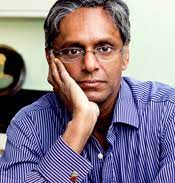
Showing posts with label Chandran Kukathas. Show all posts

Friday, May 19, 2023

TGIF: No One Has a Right to Make Immigration Policy

Florida Gov. Ron DeSantis says "no one has a right to immigrate" to the United States. "We determine as Americans," he says, "what type of immigration system benefits our country. When you're doing immigration, it's not for their benefit as foreigners. It's for your benefit as Americans. So if there's legal immigration that's harming America, we shouldn't do that either."

I'd turn that around and say that no one, including a state legislature, has a right to forbid or restrict immigration, the peaceful movement of individuals from outside to inside America. That doesn't mean that landowners cannot set rules for who enters their own property. That is not immigration policy.

We're talking about a political concept. You can see this in DeSantis's words "We determine as Americans." Apart from immigration, "we" do not "determine as Americans" who can and cannot come to my home. I do that as the owner. Normally I need no one's permission to invite or exclude. (It's more complicated in the business context, where association can be legally required rather than forbidden.) But if the person I wish to invite lacks the government's permission to be in the country, then it's a different story. That's not a natural limitation on a normal and natural right. It's the result of a decision by a group of politicians, a decision that may well conflict with what many people want to do. How dare the politicians interfere?

DeSantis says that a good immigration policy should benefit the country, or "Americans." It's hard to miss the conservative collectivism in theory and elitism in practice. The collectivism lies in what appears to be decision-making not by individuals, but by a purported entity, namely, the "country." What about dissenters? They don't matter. What counts, presumably, is the Rousseauian general will. Dissenters must be forced to be "free" by going along with the majority. In theory the majority rules.

But the elitism lies in the fact that majorities don't really rule. They pick the officeholders (although not the bureaucrats), but what happens next can hardly be called rule by the majority because what the majority may want on a given issue must pass through a very thick filter before it becomes enacted. That filter is administered by special interests inside and outside of the government that typically have preferences that can differ vastly from the majority of voters. To keep the people in the dark about this, those interests not only lie and propagandize, but they also obfuscate and use other tactics to make it difficult for the people to know what the government is really doing or to change it if they find out. (Charlotte Twight's Dependent on D.C.: The Rise of Federal Control over the Lives of Ordinary Americans spells out the theory and history of this.)

The upshot is that DeSantis's position -- which is widely shared on the right and left-- is incoherent. "America" does not and could not make immigration policy. Democracy is a facade that blocks our view of reality.

But even if "America" could make the policy, it would be unjust, not to mention self-defeating, to block or restrict immigration. No one, not even a majority of congressmen backed by a president, has the right to tell individuals, wherever they were born, that they cannot consensually enter other people's property to live, rent, buy, work, or otherwise associate peacefully. Even if a lot of people band together, they can have no right to block free exchanges between Americans and foreigners. A group cannot have any rights that its individual members do not have. Zero multiplied by any number is still zero. So "America" has no right to keep immigrants out. The right to move about while respecting other people's rights is universal, and anyone is innocent until charged and proven guilty. The Declaration of Independence speaks of rights that precede government as belonging not only to Americans but to all people. Those rights include the right to life, liberty, and the pursuit of happiness. What's so hard to understand about that?

The idea that the country ought to control immigration should disturb advocates of individual liberty. According to classical liberal principles, a country is not a country club with a membership committee. Rather, it's a free association where individuals and their associates may live and prosper in peace. And they are left in peace unless they harm other people's bodies or steal or damage their belongings. If one of them wants to sell to, rent to, employ, or befriend someone whom others regard as an outsider, no one has a right to interfere.

If anyone does interfere, he's not only interfering with the "outsider", he's also interfering with "insiders." It can't be otherwise, as political scientist Chandran Kukathas points out. Kukathas "put[s] freedom at the centre of the immigration question. At stake are the liberty of citizens and other residents of the free society and therefore the free society itself. To put it simply, immigration controls are controls on people. and it is not possible to control some people without controlling others. More to the point, it is not possible to control outsiders (aliens, foreigners, would-be immigrants) without controlling insiders as well…. The conclusion ... is that if we value freedom–as we should–we ought to be wary of immigration control."

Going further, Kukathas challenges the view that society is “made up of members“ and that it's “some kind of unit comprised largely of people who belong together in some way, and whose belonging entitles them to determine who may or may not become a part of that unit, or indeed even enter the geographic space or territory it occupies.”

"The thought running through this book [Immigration and Freedom]," he writes, "is that membership is an ideal that is not only overrated but also dangerous from the perspective of freedom. It is at odds with the idea of people living together freely, for it subordinates that freedom to an altogether different ideal–one that elevates conformity and control over other, freer, ways of being. If we are to live freely, we must be able to relate to one another not as members but as humans."

Where there are members, there must be nonmembers -- which licenses the politicians to do unlimited mischief. The young century has taught this lesson well.

DeSantis and all others who think "America" can forbid or restrict immigration without violating the natural rights of both foreigners and Americans, or without reducing all our own well-being, are knowingly or unknowingly mistaken. Once again we're being ruled by presumptuous social engineers, cheered on by unreflective supporters.

Friday, June 03, 2022

TGIF: Heartless Immigration Restrictions Need Replacing

Some elements of the right-wing are spreading the fear that Democrats are engineering a take-over of America by replacing white voters with nonwhites through liberal immigration policies. It's come to be known as "the great replacement," and in its ugliest form, it is said to be a Jewish conspiracy. Remember the sickening chant at the 2017 right-wing Charlottesville rally: "Jews will not replace us"?

I wish this fear-mongering could be ignored, but since a few fanatics have committed violence apparently to prevent the "great replacement," it needs to be discussed.

Why would anyone lose even one wink over this alleged plot? For one thing, even if such a plan existed, the Democrats can't possibly know how future citizens will vote or even if they will vote. Why assume they will follow the Democrats' orders, as the right-winders expect? In recent years, some Republicans have done fairly well with Latino voters. As long as conservatives talk about the nonwhite population as though it were a group of obedient children rather than moral agents, they needn't wonder why they don't win more votes in those communities. Just a thought, but maybe people who are energetic and entrepreneurial enough to leave their impoverished homes for a shot at greater opportunity, despite the risks, ought to be wooed, not alienated by political activists who pay lip service to individual enterprise.

Regardless of whether some Democratic politicians and left-wing activists think they can carry out the alleged plot or whether their statements praising America's changing ethnic composition are merely quoted out of context, who cares? True freedom-lovers favor whatever ethnic composition results from the freely chosen actions of sovereign individuals -- both current and aspiring Americans. Freedom's champions also favor progressively shrinking government power so that no one -- regardless of ethnicity -- can impose his or her values on others. (Strictly speaking, one value should be imposed on others, the liberal value summed up by the phrase live and let live. In other words, aggressive physical force is illegitimate.)

It would be nice if someone prominent in American politics would say to the conspiracy theorists: "Who needs replacement conspiracy to explain the need for open borders? We already have a perfectly good reason to open the gates: immigrants not only help themselves by coming here, but they also improve our society and the whole world."

But don't hold your breath. Does a Democrat walk the land who favors unrestricted immigration? Please let me know.

On the contrary, some Democrats have their own replacement conspiracy theory about those who favor free (or at least freer) immigration. Sen. Bernie Sanders, the economically illiterate darling of the left, says he opposes open borders because "the Koch brothers," by which he means anyone who favors freedom of movement (that is, libertarians), want cheap labor to replace more expensive American labor. It never occurs to politicians like Sanders that open-borders advocates might just favor individual liberty. Isn't it interesting how much the right and left have in common?

Tucker Carlson leads the right-wing media in "exposing" the great plot to create a new electorate through immigration. His trope is revealing: "Look, if this was happening in your house, your parents adopted a bunch of new siblings and gave them brand-new bikes, you would say to your siblings, 'You know, I think we're being replaced by kids our parents love more.'"

It doesn't get more ridiculous than that. First of all, would you say that? Second, in what respect do new arrivals get better "bikes" than those who were born here? Third, why does the government give anyone "bikes"?

The most revealing bit is Carlson's analogizing the country to a family with the government as parents. It seems that the godfather of American conservatism isn't Edmund Burke, but Sir Robert Filmer. (John Locke's liberalism was a response to the monarchist Filmer.) According to the Encyclopedia Britannica,

Filmer believed that the state was a family, that the first king was a father, and that submission to patriarchal authority was the key to political obligation. Making a strained interpretation of scripture, typical of his time but ridiculed by Locke, he pronounced that Adam was the first king and that Charles I ruled in England as Adam’s eldest heir. Filmer represented that patriarchal social structure which characterized Europe until the Industrial Revolution.

So let's get serious. Drawing on contemporary data, history, and sound social theory, George Mason University Professor Bryan Caplan shows that every one of the common fears about free immigration --  lower wages, a bigger welfare state, radical cultural change, authoritarianism, etc. -- are either concocted wholesale or outrageously exaggerated. So stop worrying! (See this interview with Caplan and check out his graphic nonfiction book, Open Borders: The Science and Ethics of Immigration.)

By the way, enacting immigration controls in the name of staving off authoritarianism is a cruel joke because controls on immigration necessarily are controls on whomever the state chooses to define as a citizen.

Instead of favoring heartless restrictions on people's freedom to move, why don't people who worry about immigration instead call for limits on government power so that fewer areas of life are controlled by politicians beholden to blocs of voters? Conservatives must have their own sort of welfare state in mind.

Friday, February 04, 2022

TGIF: Disagreement without Conflict

Chandran Kukathas

I'll admit it: I'm a natural-rights guy. I think you can get to individual rights, including the right to property, from within the ancient Greek eudaimonist (virtue ethics) and Spinozist tradition.

But here's a separate point: rights-talk may not be the best way to bring unconvinced people over to the libertarian view of the good society. Heresy? I hope not.

This video interview with Chandran Kukathas, author of The Libertarian Archipelago, got me thinking about this subject. Kukathas (whom I've written about here and here) starts with what ought to be obvious to everyone: people disagree about all kinds of things. As he writes in his book:

In a world of moral and cultural diversity one of the subjects over which there is dispute, and even conflict, is the subject of justice. Different peoples, or groups, or communities, have different views or conceptions of justice. In these circumstances the question is: how can people live together freely when there is this sort of moral diversity?"

Even when they agree on ends, they often disagree about the means to those ends. Disagreement is here, has always been here, and ain't going anywhere.

So what, you ask? What does that have to do with winning adherents to the libertarian view of the good society? It has a lot to do with it. Much modern libertarian thinking has been shaped by theorists who at least implied that the way to a free society is to get widespread if not universal agreement about rights and hence justice -- in other words, assent to a libertarian law code deduced from the nonaggression principle. (Some even think the agreement must extend to other philosophical matters like metaphysics, epistemology, ethics, aesthetics.) As a libertarian I came up  (long ago) in that tradition. But now I wonder about its strategic, but not its truth, value.

If disagreement is and will be ubiquitous, how in hell can we hope for widespread agreement on a detailed code of law or rights theory? We can't hope for that, and we should stop acting as though we can because it looks to be a time-waster. It's been tried, so we must learn there are no magic words to do the trick.

Does that leave us in despair? Have we no hope for liberty? Maybe not. Chandran Kukathas gives us reason to hope.

Since broad disagreement is not going away, the most we can work for is an environment characterized as disagreement without conflict. I'm not a utopian. Conflict isn't going anywhere either, but it can be minimized through liberal institutions based on freedom of association within the current national territories, the "live and let live" principle, which would not require territory-wide agreement to a detailed doctrine. In other words, if we can't get universal agreement to a code of justice, how about to the principle of "mutual toleration"?

In this age of extreme and acrimonious polarization, doesn't that sound like a strategic approach worth pursuing? If no monopoly state is available, Group A won't have to live in fear that Group B will seize it and impose its preferences, and thus Group A won't have to seize the state apparatus first in self-defense.

Some may object to putting rights-talk on the shelf in favor of something less "pure." They may insist that in America, home of the Declaration of Independence with its stirring lines about inalienable rights that predate government, rights talk resonates as it does nowhere else.

That was my first thought. But then I remembered how the list of things that Americans are said to have a right to has grown exponentially over the decades. No one has been able to find the right incantation to stop, much less, reverse that growth. Believe me, many people have tried. And once you give flight to even legitimate rights-talk, you have no control over where it goes and what form it takes. Once "counterfeit rights" gain currency, we enter the realm of rights-balancing. And guess who's in charge of that.

So, Kukathas writes in The Liberal Archipelago, "The primary question of politics is not about justice or rights but about power, who may have it, and what may be done with it. Views about rights or about justice may have a significant bearing on any answer to this question, but this remains the important question."

As a consequence, Kukathas continues, "The principles of a free society describe not a hierarchy of superior and subordinate authorities but an archipelago of competing and overlapping jurisdictions." (Emphasis added. That is an extremely important adjective because it indicates that the authorities do not have monopolies even within "their" territories, suggesting a polycentric approach to law and governance.)

Kukathas clearly does not buy James Madison's famous line in Federalist 51: "In framing a government which is to be administered by men over men, the great difficulty lies in this: you must first enable the government to control the governed; and in the next place oblige it to control itself."

Thus those who value liberty must cultivate a distrust of power of all kinds. Kukathas says in the interview that the government is always a they that "co-opts us on a regular basis," and never a we. "In a free society ... only the freedom to associate is fundamental." The freedom of exit of course is the corollary.

As you might expect, Kukathas challenges the conventional view of what even constitutes the good society. He is "skeptical" about the need for "social unity," suggesting it

is not nearly as important as has been intimated. On the contrary, the good society is not something confined by the boundaries needed to make it one. Political authority is necessary in any good society; but political authority should be understood as something which has a place in the good society, rather than as something which circumscribes it.

In opposition to the body-politic metaphor, Kukathas offers a metaphor "of society as an archipelago of different communities operating in a sea of mutual toleration.... [T]he liberal archipelago is a society of societies which is neither the creation nor the object of control of any single authority, though it is a form of order in which authorities function under laws which are themselves beyond the reach of any singular power."

Importantly, he adds, "Implicit in this is a rejection of nationalism, and of the idea that we should start with the assumption that the nation-state is the 'society' which is properly the object of concern when we ask what is a free society."

Summing up in the interview, Kukathas says,

Having asked how can a diversity of peoples live together freely given their differences, [my theory] asserts that the answer lies in the way authority is allocated. More particularly, it argues that in a free society -- which is to say, a liberal society -- there will be a multiplicity of authorities, each independent of the others, and sustained by the acquiescence of its subjects. A liberal society is marked by respect for the independence of other authorities, and a reluctance to intervene in their affairs.

That reluctance would be reinforced by the fact that people who might like to control other people's peaceful conduct would have to pay out of pocket for the pleasure. They would not be able to socialize the cost by imposing it on a large number of otherwise indifferent taxpayers. The more something costs, the less people tend to buy. Call it libertarianism by default.

That seems like a vision that could win wide assent.

TGIF -- The Goal Is Freedom -- appears on Fridays.

Friday, January 28, 2022

TGIF: Anti-Woke Isn't Necessarily Pro-Liberty

I had a reminder this week that those who oppose fashionable postmodernist-style attacks on reason and objectivity, such as "critical" race and gender theories, are not necessarily consistent friends of liberty and the free society.

That reminder came in a recent video commentary by Dave Rubin on a year-old speech by Homeland Security Secretary Alejandro N. Mayorkas before the U.S. Conference of Mayors. What upset Rubin so much that he had to play the video clip several times was this statement from Mayorkas: "Unlawful presence in the United States will alone not be a basis for an immigration enforcement action...." Mayorkas said more (hence my ellipsis), but that's all that Rubin drew attention to. (I'll cover the rest in a bit.)

Here's what Rubin had to say in reaction:

How insane is that?.... We are literally saying, "If you are here illegally, but you don't do anything bad, we just ain't gonna do anything about it." That's not how a country is run. Dare I quote that orange guy, who said, "Without borders you don't have a country"? Well, that's pretty much where we're at at this point.

So what's wrong here? Quite a bit, actually, so it's tough to know where to start. It tells me a lot that Rubin's cognitive system -- the part that chooses words and phrases -- isn't set up to avoid suggesting that anyone could or should run our country. Think about that phrase. To quote Rubin, "How insane is that?" We shouldn't want anyone or any group to even try to run the country (no matter how that is defined) because even though the effort would fail, the attempt would inflict a lot of pain.

Why doesn't Rubin know that a free society (which he says he wants) runs itself -- it's a bottom-up, emergent, undesigned order -- when the politicians and bureaucrats leave it alone, and it does so better than anything the politicians and bureaucrats have come up with? Dave, read your Thomas Paine, whom I quoted recently and will do so again:

Great part of that order which reigns among mankind is not the effect of government. It has its origin in the principles of society and the natural constitution of man. It existed prior to government, and would exist if the formality of government was abolished. The mutual dependence and reciprocal interest which man has upon man, and all the parts of civilised community upon each other, create that great chain of connection which holds it together. The landholder, the farmer, the manufacturer, the merchant, the tradesman, and every occupation, prospers by the aid which each receives from the other, and from the whole. Common interest regulates their concerns, and forms their law; and the laws which common usage ordains, have a greater influence than the laws of government. In fine, society performs for itself almost everything which is ascribed to government.

As to Trump's dictum that you can't have a country without borders, Rubin might want to give that another thought because maybe that definition of country is unnecessarily narrow. On the other hand, if we accept that notion of country, maybe we'd opt for something else after closer consideration.

Rubin and the orange guy beg this question: What kind of society do or should we want? They assume that virtually everyone (or everyone who matters) already agrees on the answer even though that is what needs to be discussed explicitly before we decide. (That's how I still understand the phrase beg the question.)

As the political philosopher Chandran Kukathas points out, "border control" is not really about controlling borders. It's not even mainly about controlling immigrants. Rather it's about controlling citizens. You can't restrict immigration without restricting the peaceful activities of those identified as citizens. That identification process is based on contingent political decisions made by fallible, vain, and even corrupt rulers; it is not a metaphysical process conducted by high priests. (See Kukathas's book Immigration and Freedom.)

Kukathas writes:

[T]he threat to freedom comes not from immigration but from immigration control…. Immigration control is not merely about restricting border-crossing but as much, if not more, about constraining what outsiders might do once they have crossed the border in a society. But it is difficult to control outsiders without also controlling insiders, since insiders are all too ready and willing to hire, teach, rent to, trade with, marry, and generally associate with outsiders. Moreover, insiders and outsiders are not readily distinguishable unless there are instruments of control in place to identify one or the other. [Emphasis added.]

Yikes!

Some citizens may say they are willing to accept those restrictions because the imagined benefits of immigrant control outweigh the costs. Kukathas suggests two responses. First, are those who express such willingness really aware of the costs in terms of lost liberty, prosperity, social opportunities, and cultural vitality?

And second, what about the citizens who think the costs swamp any benefits? Why should their welfare preferences be overridden by people who are more change-averse? Someone who doesn't want to associate with immigrants is free not to do so. Why, then, isn't the freedom to associate extended to those who would welcome immigrants?

Kukathas writes that if we're serious about freedom, we shouldn't think that society “is some kind of unit comprised largely of people who belong together in some way, and whose belonging entitles them to determine who may or may not become a part of that unit, or indeed even enter the geographic space or territory it occupies.” In other words, freedom is incompatible with the ancient notion of society that we still labor under in many ways. (See Benjamin Constant's classic 1819 essay, "The Liberty of the Ancients Compared with that of the Moderns.")

Needless to say, if someone (immigrant or not) commits aggression against another person or his property, the system of governance (whether a monopoly state or a stateless competitive arrangement) ought to respond appropriately, observing the long-accepted safeguards, such as the presumption of innocence and burden of proof.

Now let's turn to Mayorkas's remarks. As noted, Rubin only quotes a fragment, and in isolation it's not bad. Rubin's rewording highlights its virtue: "If you are here illegally, but you don't do anything bad, we just ain't gonna do anything about it." What's wrong with that?

Mayorkas did not go nearly far enough, however. As I explain here, since U.S. laws do not apply outside of U.S. territory, a person standing on Mexican soil cannot violate a U.S. prohibition against unauthorized border crossings. By the time he is on U.S. soil and subject to U.S. law, the crossing has already occurred. This means that people like Rubin who can't stand the thought of living among people whose first act with respect to the United States was to break the law can rest easy.

If they are concerned about those who overstay their visas, we might ask on what grounds bureaucrats (as opposed to property owners) have the authority to set the terms of visits to America. That implies that the government or the people as a whole own the country, but that's a question that we haven't debated yet. It's more question-begging.

Unfortunately, Mayorkas didn't leave the matter there. He watered down the statement with conditions that are too vague to make a freedom-lover comfortable. That should be unsurprising since the Biden administration has not kept its promise to undo the outrageous Trump approach to immigration.

Mayorkas completed his sentence this way: "we will allocate our efforts, we will allocate our resources on those individuals who present a current public safety threat, a threat to national security, or a threat to our border security, and that is a very important principle."

He's pretty much taken away with the right-hand everything he had given with the left.

At any rate, as Rubin and others make clear, the anti-woke left and right have a long way to go.

Friday, May 07, 2021

TGIF: A Refreshing Way to Think about Immigration

What I'm going to say about Chandran Kukathas's latest book, Immigration and Freedom, does not constitute a book review. Think of it instead as a book alert. Even having read only the preface and a couple of chapters, I am confident it is a book that fans of liberty will be interested in. You can tell by the title.

Kukathas is a classical liberal professor of political science at the School of Social Sciences, Singapore Management University, whose previous books have argued that monopoly government, as opposed to a polycentric legal order, is inimical to human diversity (The Liberal Archipelago) and have delved critically but appreciatively into the thought of F. A. Hayek (Hayek and Modern Liberalism). I first met Kukathas when he was a postdoctoral fellow at the Institute for Humane Studies in the 1980s, so his remarkable academic accomplishments since then come as no surprise.

His latest book aims for a different take on the much-discussed controversy surrounding immigration. What Kukathas explores is how restrictions on immigration impinge on the freedom of the citizens of the country that imposes those restrictions. Of course, he does not neglect the people who wish to move, but in writing his book, he intended to address a matter that has at least been insufficiently addressed by others. He does not neglect the economic ramifications of immigration, which have been widely explored from all sides, but that is not his main concern.

I note in the most positive way that this is a formidable book. It is well-written, but that doesn't make it light reading. Chapter two emphasizes at length the often-counterintuitive point that terms like immigrant, citizen, native, and national are political constructs, not metaphysical categories. The rules regarding those terms vary widely around the world, and it is wrong to think the "right" way merely waits to be discovered. We're talking about the state here, and as is often the case, arbitrariness and interest rule supreme. As Kukathas puts it, for example, "Just as it is possible to deny that a native-born resident can be a citizen, so is it possible to identify someone who is a resident but not a citizen as a native, or as a national."

He stresses that terms like immigrant cannot be defined without simultaneously defining terms like citizen, and that means immigration restrictions must effect non-immigrants within the country in question. Once stated, this may seem obvious, but Kukathas seems right in saying it is overlooked. Because of this fact, immigration is a much bigger subject than border control, however important that is. This indeed is a rich and deeply textured work of scholarship.

In his preface Kukathas states, "As someone sceptical about the pretensions of the modern state, I have long been troubled by its claims to control the movement of people, and even more bothered by the consequences of its exercise of the power to do so." This is the right way to launch a critical look at restrictions on immigration.

He goes on: contrary to those who think

the movement of peoples from other parts of the world threatens to transform our society and to undermine its fundamental values ... [t]he argument of this book is that the threat to freedom comes not from immigration but from immigration control.... Immigration control is not merely about restricting border-crossing but as much, if not more, about constraining what outsiders might do once they have crossed the border in a society. But it is difficult to control outsiders without also controlling insiders, since insiders are all too ready and willing to hire, teach, rent to, trade with, marry, and generally associate with outsiders. Moreover, insiders and outsiders are not readily distinguishable unless there are instruments of control in place to identify one or the other. [Emphasis added.]

You can see where this is going. This is not a polemic on behalf of open borders, though Kukathas is "sympathetic ... to that ideal." It's a much deeper look at the matter, and that makes it noteworthy. And this is no simple work of a priori political philosophy. He is as interested in history, law, anthropology, and sociology as he is in political philosophy. As I said: rich and deeply textured.

In chapter one, Kukathas writes:

The point of this book is to put freedom at the centre of the immigration question. At stake are the liberty of citizens and other residents of the free society and therefore the free society itself. To put it simply, immigration controls are controls on people. and it is not possible to control some people without controlling others. More to the point, it is not possible to control outsiders (aliens, foreigners, would-be immigrants) without controlling insiders as well.... The conclusion [the book] defends is that if we value freedom--as we should--we ought to be wary of immigration control.

Amen to that.

Finally, Kukathas moves to "a larger thesis that lies at the heart of this work." He thinks we have a problem in how we see society itself, that is, "the relationship between society and its inhabitants." Specifically, the prevailing vision is of society as "made up of members"; in other words, society "is some kind of unit comprised largely of people who belong together in some way, and whose belonging entitles them to determine who may or may not become a part of that unit, or indeed even enter the geographic space or territory it occupies." (Emphasis is in the original.)

But wait, Kukathas writes. Why think of society that way? He writes:

The thought running through this book is that membership is an ideal that is not only overrated but also dangerous from the perspective of freedom. It is at odds with the ideal of people living together freely, for it subordinates that freedom to an altogether different ideal--one that elevates conformity and control over other, freer, ways of being. If we are to live freely, we must be able to relate to one another not as members but as humans.

I hope I've shown that this is a refreshing approach that deserves wide attention.