|
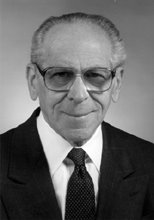
| R-L: Thomas Szasz, Raico Raico, Me |
I maintain that mental illness is a metaphorical disease: that bodily illness stands in the same relation to mental illness as a defective television set stands to a bad television program.
There is no psychology; there is only biography and autobiography.
--Thomas Szasz (1920-2012)
Monday, April 15, was the 104th birthday of Thomas Szasz, the late great debunker of the system of social control perpetrated, in cahoots with the state, by institutional psychiatry, the mental-health establishment. That system has included among its methods lobotomy, electroshock, involuntary "hospitalization" (a "crime against humanity"), outpatient commitment, forced "medication," and other means. For Szasz, who excelled at exposing how scientific language is often used to subjugate, forced hospitalization, treatment, and medication were in fact imprisonment, torture, and poisoning.
Szasz's soft accented voice was powerful because he had credentials: he was a medical doctor, psychiatrist, practicing psychotherapist (for consenting clients only), and professor of psychiatry at the State University of New York Upstate Medical University in Syracuse. He knew from the inside what he was talking about.
Born in Budapest, Hungary, he came to America in 1938 at age 18. He adored America's founding principles, which proclaimed the natural right to life, liberty, and the pursuit of happiness. He was a libertarian, favoring private property and free enterprise. He loved autonomy and self-responsibility. As a result, he fought tirelessly against the government-medical complex and its persecution of people who, though perhaps disturbing to others and even themselves, had violated no one's rights.
I knew Tom Szasz. He wrote a column for The Freeman (Foundation for Economic Education) during my 15 years as the editor. Working with him was a great honor, not to mention a great pleasure. He was unique. He was wise.
Szasz (pronounced like the first syllable in Saskatchewan) wrote dozens of books and hundreds of articles and kept writing practically to the end of his long life. He made his first big splash with a radical book, The Myth of Mental Illness: Foundations of a Theory of Personal Conduct (1961), which people should read regardless of their interest in psychiatry. This book and the work that followed got him routinely denounced by the government-medical establishment. Ironically, "experts" said he was crazy and called for his firing from his university. Call it an early attempt at cancellation. Why? Because Szasz disturbed the peace. Later, people acknowledged his contributions, perhaps because he had exposed the worst psychiatric abuses, such as the warehousing called hospitalization. He even won awards. But his view of human behavior has not yet won the day.
By "myth" Szasz meant that mental illness is a metaphor that is unfortunately taken literally. He wrote, "Typhoid fever is a disease. Spring fever is not a disease; it is a figure of speech, a metaphoric disease. All mental diseases are metaphoric diseases...." He did not deny that people can behave oddly, annoyingly, disturbingly, and even threateningly. But he denied that behavior was disease: "In asserting that there is no such thing as mental illness, I do not deny that people have problems coping with life and each other." They may need many things, but physicians and psychiatrists are not among them.
Nor did he deny that people can suffer from brain disease or that currently unknown brain diseases could be discovered in the future. Again, he meant that disapproved or immoral behavior is human action not illness: it has reasons, motives, purposes, and stories -- not causes, as we observe in nature. "There is no psychology," Szasz aphorized. "There is only biography and autobiography." What's more, if all mental illnesses were brain diseases, Szasz asked, why would we need psychiatrists? We have neurologists already. Moreover, people with real brain diseases, like other physical diseases, are free to reject treatment. Ergo...
He was fond of philosopher Gilbert Ryle's insight about myths in The Concept of Mind: "A myth is, of course, not a fairy story. It is the presentation of facts belonging to one category in the idioms belonging to another. To explode a myth is accordingly not to deny the facts but to re-allocate them." That's Tom's approach.
Thus when people asked Szasz if he was saying that no one was crazy, he'd say something like, "I didn't say no one was crazy. I said no one was mentally ill." Of course, if there is no mental illness, then there is no mental health either. Health and illness have historically referred to the body, he said. The "mind," however, is not a literal organ; it's a metaphorical organ. How can it be ill? Pathologists find no mental illnesses when they do autopsies.
By the way, his book The Meaning of Mind: Language, Morality, and Neuroscience is a gem. Spoiler: "Mind is a verb." In other words, mind is not something we have, but something we do. We aren't robots, as some neuroscientists think; we are minders -- conscious and self-conscious beings who mind. We say, "Mind your own business" and "Mind your manners." Szasz taught us to mind our metaphors.
The connection to freedom and libertarianism, if not already obvious, becomes clear when we see that instead of being about controlling disease, psychiatry is about controlling behavior that someone else finds objectionable, for good or bad reasons. Aggression, he said, is properly handled by the criminal justice system. As he wrote in concluding The Myth:
Psychiatrists ... [in] actual practice ... deal with personal, social, and ethical problems in living.... [Emphasis added.]
Human behavior is fundamentally moral behavior. Attempts to describe and alter such behavior without, at the same time, coming to grips with the issue of ethical values are therefore doomed to failure.
Szasz viewed many issues through this lens. He wrote two books defending the freedom to take recreational drugs and to self-medicate without a doctor's permission (prescription): Ceremonial Chemistry: The Ritual Persecution of Drugs, Addicts, and Pushers and Our Right to Drugs: The Case for a Free Market. Addiction -- although perhaps a bad habit that takes great effort to break -- is not a disease. Nor were any of the other "addictions": gambling, shopping, sex, you name it. He also published two books on the right to commit suicide.
From the start Szasz opposed psychiatry's regarding homosexuality as a mental illness properly subject to forcible "treatment" and called for full recognition of the individual rights of gay men and lesbians. In the 1970s the American Psychiatric Association board finally voted to stop classifying homosexuality as a mental illness. In real medicine, Szasz pointed out, physicians do not vote on what is and is not an illness. That tells you something.
He also spoke out against the insanity defense in criminal trials. Criminals are human beings, he said, who should be judged morally and held accountable for their actions.
His life's mission was to battle for liberty and self-responsibility by discrediting what he called the "therapeutic state." He thus fought courageously against the "medicalization of everyday life," that is, the recasting of human freedom, choice, and action as medical, not moral, concerns and in the case of disapproved choices and actions, as diseases. F. A. Hayek, whom Szasz admired, called the misapplication of science to areas outside its province scientism. As Szasz put it, "Mental illness is a myth, whose function is to disguise and thus render more palatable the bitter pill of moral conflicts in human relations."
I thought about Szasz often during the pandemic and the government's "science-based" restrictions on liberty. What exactly would he have been saying? I am certain of two things.
First, he would have insisted that physicians and scientists are not qualified to tell us what trade-offs we should make between liberty and health. That's not a medical or scientific issue, but a moral one that should be left to each individual. Advice, if requested, is one thing. Colluding with the state to violate liberty is something else.
Second, he would have condemned all government and scientific attempts to quash public debate about what COVID-19 was, where it came from, and what to do about it. He loved John Stuart Mill's On Liberty and its plea for freedom of speech.
His magnum opus is Insanity: The Idea and Its Consequences, which I recommend. Highly readable and entertaining, it covers much of what he had to say over the years and responds to critics. He also published several collections of wise aphorisms, a form in which he was brilliant. Samples: "The proverb warns that 'You should not bite the hand that feeds you.' But maybe you should, if it prevents you from feeding yourself." And: "A child becomes an adult when he realizes that he has a right not only to be right but also to be wrong." You will learn from his aphorism alone.
I especially want to draw attention to Szasz's 2004 book, Faith in Freedom: Libertarian Principles and Psychiatric Practices, in which he argued that the freedom philosophy is incompatible with psychiatry as we know it. Besides chapters on that theme, he also has chapters on particular libertarians and civil libertarians: Ludwig von Mises, F. A Hayek, Murray Rothbard, Robert Nozick, Julian Simon, Deirdre McCloskey, Ayn Rand, Nathaniel Branden, Bertrand Russell, John Stuart Mill, and the American Civil Liberties Union. His analysis is at times critical because libertarians have too often failed to apply the nonaggression principle (obligation) to those whom state-deputized psychiatrists have declared mentally ill. The chapter "Economics and Psychiatry: Twin Scientisms" is pathbreaking. In the Preface, he wrote:
I believe that involuntary psychiatry [like chattel slavery] is -- regardless of any good in it, real or attributed -- immoral and illegitimate. The proper response to the outrage of psychiatric slavery is abolition, not reform.
I contend that this position is not merely consistent with the basic philosophy of libertarianism but inherent in it. Unfortunately, liberty is something for which everyone regards himself as fit, but most people regard certain other persons or the members of certain groups as unfit. In the past, among the unfit were blacks, women, Jews, and "perverts" such as homosexuals. Today the persons most often considered unfit for liberty are the mentally ill.
Thomas Szasz is definitely someone whom libertarians ought to check out.
In the meantime, see my article "Szasz in One Lesson" and my 2005 video interview with Tom on YouTube. And visit Jeffrey Schaler's Thomas S. Szasz Cybercenter for Liberty and Responsibility for many articles by and about him.