Monday, December 15, 2025
Marx Corrected


Friday, July 25, 2025
TGIF: What Is Capitalism?
So, what is capitalism? The answer will depend on who's being asked. Language, like markets, basic law, and customs, is a spontaneous order. No one plans it. Words drift in their meaning in ways that probably can’t be fully explained. Language is a tool that people use to think and communicate, so it’s adapted according to needs, changing circumstances, and even confusion.
That doesn’t mean we can say nothing about words like capitalism. My views on that word have changed over the years; I once contributed to a book called Markets, Not Capitalism. The book was meant to show that the free market differs from capitalism. Is it right? Again, that depends on how one defines capitalism. As far as I can tell, most people who dislike capitalism also dislike the idea of a market-based society. Some prominent pro-market thinkers, Nobel laureate F. A. Hayek among them, disliked the word for a variety of reasons.
At any rate, the word is not going away. Since no one controls the language, we should put communication before personal preferences. Let's define our terms clearly and then talk about reality.
Despite variation in the definition of capitalism, most people would agree that market orientation is at its heart. They evaluate the market differently, but it is the market that they are evaluating. So we have some common ground, even as we disagree over whether capitalism is a good or bad social arrangement or whether it conceptually includes or excludes a given practice.
I, along with many others, consider capitalism to be the social arrangement in which people are free to engage in the production and exchange of goods and services, typically for money. Left unmolested, that is what people do. Those activities generate prices, which reflect supply and demand and guide further action. To live is to act, which is to aim at ends by deploying means, which is to value. The root of this never-ending process is the wish to sustain life and to live in a particular way. (See the work of Carl Menger, Ludwig von Mises, and Ayn Rand for details.)
The institution of interpersonal exchange logically has presuppositions. It stands on a foundation. It presupposes that persons own themselves and the things they nonaggressively obtain; it also presupposes the security of contracts. These things can be violated in practice, but they are departures from the logic of the system. Historical capitalism developed over a thousand years as persons, their property (including their bodies), their contracts, and their enterprises came to be more and more respected—that is, as political power decentralized and, consequently, diminished, thanks in part to jurisdictional competition, that is, the power to vote with one's feet. (People disliked paying taxes for war and having their trade and investments disrupted.) Growing religious toleration played an important role in this process of individual liberation and spreading cooperation.
Where property and contracts became more secure, per capita wealth dramatically increased, setting an example for others. As Adam Smith put it, “Little else is requisite to carry a state to the highest degree of opulence from the lowest barbarism, but peace, easy taxes, and a tolerable administration of justice; all the rest being brought about by the natural course of things.”
This is not to say that injustice and aggression disappeared abruptly and completely. Of course, it did not. Who could have expected that? It would take time. Another way of saying this is that capitalism—to be clear, that means laissez-faire or free-market capitalism—was not fully achieved anywhere. It still hasn't been. But it would be wrong to attribute the great wealth generated by capitalism to injustice such as slavery and conquest. Advanced civilizations of the past conquered, plundered, and enslaved, but they did not produce astonishing, sustained, and widespread wealth. Capitalism and classical liberalism in Western Europe and America did something different, something special.
Societies can be judged by how close they came to achieving capitalism. We can distinguish particular practices and institutions as either capitalist or anticapitalist. It follows that crony capitalism, state capitalism, and political capitalism, etc., are not capitalist variations but moves away from capitalism (that is, from self-ownership, property rights, contract, and free exchange). Those labels are contradictions in terms because they entail limits on peaceful, productive market interaction. The predatory, which supposedly acts in the name of the collective, in effect makes itself the senior part-owner of what was or should have been private property. The system is no longer a fully market system, even if people who own capital ask for the intervention. Thus free-market capitalism is a redundancy.
For example, a political arrangement in which slavery and slave markets exist does not qualify as capitalism. Why not? Because in that basic respect, the arrangement does not fully embody self-ownership, property rights (which flow from self-ownership), and free exchange. Southern slave holders claimed that "their" slaves were property, but that was a category error because persons can be property owners, not property. Good Lockeans, the abolitionists called the slave holders "man stealers."
Similarly, a political system in which politicians and bureaucrats may interfere with people’s property and free exchange through taxation, regulation, trade barriers, subsidies, government ownership, etc., should not be called capitalist. It would be a mixture of capitalism and interventionism or socialism.
We can sum up by saying that only laissez-faire capitalism—the consistent separation of state and economy—qualifies as real capitalism. Anything less than laissez faire is less than capitalism. The government cannot regulate an economy, which is an abstraction. What it can do is restrict real individuals in their peaceful, productive market interactions. Restriction requires the use or threat of aggressive force and violence. In contrast, a capitalist society is a humane society.
Call it what you will, the system that respects our freedom to engage in mutually beneficial market relations—and its prerequisites—is worth defending against its Classic Marxist and Marxist Lite detractors, who have to distort categories like “exploitation” to make their spurious case. Capitalism, despite not being fully embraced, ushered in an era of unprecedented personal freedom and sustained, widespread wealth. Capitalism is anti-exploitationism.
(I have not reinvented the wheel. Thus related reading: “The European Miracle” by Ralph Raico, “Reconsidering Gabriel Kolko: A Half-Century Perspective” by Robert L. Bradley Jr. and Roger Donway, "Capitalism, Socialism, and 'The Middle Way': A Taxonomy" by Bradley and Donway, "Beyond 'The Money-Making Personality': Notes toward a Theory of Capitalist Orthopraxy" by Roger Donway (Journal of Ayn Rand Studies 21:1 July 2021) and The Libertarian Mind by David Boaz (especially chapter 2: "The Roots of Libertarianism.")
Friday, March 28, 2025
TGIF: "Liberalism and Capitalism"
Ludwig von Mises's 1927 path-breaking work in political theory speaks to the current generations. In section 5 of his introduction to Liberalism: The Classical Tradition, Mises sounds impeccably relevant in describing how the opponents of liberalism and the market economy twist facts that are plainly before our eyes. You'll see how he refuted the absurd claim that capitalism serves only a tiny privileged and exploitative group. The work of most thinkers passes away soon after they do. Not so with Ludwig von Mises.
He began the section by acknowledging what should be obvious. Governments have always interfered with individual freedom, free enterprise, and free markets—in a word, capitalism—in substantial ways. Laissez faire has never been allowed. That does not prove it is impossible, only that people either did not understand the system or did not want its success demonstrated. Mises wrote:
A society in which liberal principles are put into effect is usually called a capitalist society, and the condition of that society, capitalism. Since the economic policy of liberalism has everywhere been only more or less closely approximated in practice, conditions as they are in the world today provide us with but an imperfect idea of the meaning and possible accomplishments of capitalism in full flower. Nevertheless, one is altogether justified in calling our age the age of capitalism, because all that has created the wealth of our time can be traced back to capitalist institutions. It is thanks to those liberal ideas that still remain alive in our society, to what yet survives in it of the capitalist system, that the great mass of our contemporaries can enjoy a standard of living far above that which just a few generations ago was possible only to the rich and especially privileged.
This could have been written yesterday. The fabulous wealth that Americans and the inhabitants of other semi-capitalist countries enjoy would have been unfathomable just a short time ago. Previous generations would laugh at how we use the word poor today. That's what even partial freedom has accomplished. Those lagging behind have been compelled to live without the market economy, to their misfortune. We would all be richer with complete freedom.
To be sure, in the customary rhetoric of the demagogues these facts are represented quite differently. To listen to them, one would think that all progress in the techniques of production redounds to the exclusive benefit of a favored few, while the masses sink ever more deeply into misery. However, it requires only a moment’s reflection to realize that the fruits of all technological and industrial innovations make for an improvement in the satisfaction of the wants of the great masses. All big industries that produce consumers’ goods work directly for their benefit; all industries that produce machines and half-finished products work for them indirectly. The great industrial developments of the last decades, like those of the eighteenth century that are designated by the not altogether happily chosen phrase, “the Industrial Revolution,” have resulted, above all, in a better satisfaction of the needs of the masses. The development of the clothing industry, the mechanization of shoe production, and improvements in the processing and distribution of foodstuffs have, by their very nature, benefited the widest public. It is thanks to these industries that the masses today are far better clothed and fed than ever before. However, mass production provides not only for food, shelter, and clothing, but also for other requirements of the multitude. The press serves the masses quite as much as the motion picture industry, and even the theater and similar strongholds of the arts are daily becoming more and more places of mass entertainment.
As economist Bryan Caplan says, mass consumption requires mass production, and nowhere in history has mass production benefited only a small segment of society. Mises continued:
Nevertheless, as a result of the zealous propaganda of the antiliberal parties, which twists the facts the other way round, people today have come to associate the ideas of liberalism and capitalism with the image of a world plunged into ever increasing misery and poverty. To be sure, no amount of depreciatory propaganda could ever succeed, as the demagogues had hoped, in giving the words “liberal” and “liberalism” a completely pejorative connotation. In the last analysis, it is not possible to brush aside the fact that, in spite of all the efforts of antiliberal propaganda, there is something in these expressions that suggests what every normal person feels when he hears the word “freedom.” Antiliberal propaganda, therefore, avoids mentioning the word “liberalism” too often and prefers the infamies that it attributes to the liberal system to be associated with the term “capitalism.” That word brings to mind a flint-hearted capitalist, who thinks of nothing but his own enrichment, even if that is possible only through the exploitation of his fellow men.
Here, things in some ways have changed for the worse. The illiberals of the so-called left and right tribes have indeed made the word liberal a pejorative. It's become almost as pejorative as capitalism. But as Mises pointed out, one simple and undeniable fact about the market economy is overlooked:
It hardly occurs to anyone, when he forms his notion of a capitalist, that a social order organized on genuinely liberal principles is so constituted as to leave the entrepreneurs and the capitalists only one way to wealth, viz., by better providing their fellow men with what they themselves think they need. Instead of speaking of capitalism in connection with the prodigious improvement in the standard of living of the masses, antiliberal propaganda mentions capitalism only in referring to those phenomena whose emergence was made possible solely because of the restraints that were imposed upon liberalism. No reference is made to the fact that capitalism has placed a delectable luxury as well as a food, in the form of sugar, at the disposal of the great masses. Capitalism is mentioned in connection with sugar only when the price of sugar in a country is raised above the world market price by a cartel. As if such a development were even conceivable in a social order in which liberal principles were put into effect! In a country with a liberal regime, in which there are no tariffs, cartels capable of driving the price of a commodity above the world market price would be quite unthinkable.
In other words, the illiberal pins on the market economy the failings that come from the government's subversion of the market economy.
The links in the chain of reasoning by which antiliberal demagogy succeeds in laying upon liberalism and capitalism the blame for all the excesses and evil consequences of antiliberal policies are as follows: One starts from the assumption that liberal principles aim at promoting the interests of the capitalists and entrepreneurs at the expense of the interests of the rest of the population and that liberalism is a policy that favors the rich over the poor. Then one observes that many entrepreneurs and capitalists, under certain conditions, advocate protective tariffs, and still others—the armaments manufacturers—support a policy of “national preparedness”; and, out of hand, one jumps to the conclusion that these must be “capitalistic” policies.
Note his reference to the military-industrial complex as anti-capitalist. In the Trump-tariff age, Mises's next segment is particularly apt.
In fact, however, the case is quite otherwise. Liberalism is not a policy in the interest of any particular group, but a policy in the interest of all mankind. It is, therefore, incorrect to assert that the entrepreneurs and capitalists have any special interest in supporting liberalism. Their interest in championing the liberal program is exactly the same as that of everyone else. There may be individual cases in which some entrepreneurs or capitalists cloak their special interests in the program of liberalism; but opposed to these are always the special interests of other entrepreneurs or capitalists. The matter is not quite so simple as those who everywhere scent “interests” and “interested parties” imagine. That a nation imposes a tariff on iron, for example, cannot “simply” be explained by the fact that this benefits the iron magnates. There are also persons with opposing interests in the country, even among the entrepreneurs; and, in any case, the beneficiaries of the tariff on iron are a steadily diminishing minority. Nor can bribery be the explanation, for the people bribed can likewise be only a minority; and, besides, why does only one group, the protectionists, do the bribing, and not their opponents, the freetraders?
Mises here rebuts the notion that business is a monolithic class that calls all the shots. In fact, diverse interests vie for favors from the state. One industry's subsidy is many other industries' expense. Beware simple models. They will lead you astray. Mises went on:
The fact is that the ideology that makes the protective tariff possible is created neither by the “interested parties” nor by those bribed by them, but by the ideologists, who give the world the ideas that direct the course of all human affairs. In our age, in which antiliberal ideas prevail, virtually everyone thinks accordingly, just as, a hundred years ago, most people thought in terms of the then prevailing liberal ideology. If many entrepreneurs today advocate protective tariffs, this is nothing more than the form that antiliberalism takes in their case. It has nothing to do with liberalism.
Ideas, not interests, rule the world? We need to pay more attention to this guy.
Friday, February 28, 2025
TGIF: The Aim of Classical Liberalism
These are dark days for liberalism. I mean full, across-the-board, laissez-faire free-market, classical liberalism, otherwise known as libertarianism. While some budget-cutting and bureaucracy slimming will probably go through, those steps, though necessary to advance toward liberalism, are not sufficient.
What's conspicuously missing from the regime's activities is a ringing and unmistakable endorsement of full individual liberty, which requires a free-market economy. The imagined dichotomy between economic liberty and personal liberty is a snare and a delusion. What's more personal than how one makes and spends his money? Ominously, we've heard no such endorsement of liberty from the regime.
The cuts in government now being touted might increase liberty, even if unintended; then again, it might not. It depends on how the regime deploys the power and personnel left in place. All signs point to a regime run by a man who sees the theoretically private sector as merely an extension of his domain. A truly liberal program would combine the dramatic shrinking of government with comprehensive deregulation and other market-freeing measures so that private firms could provide the legitimate services that the government ostensibly provides now. For example, eliminating Medicaid would be paired with a radical freeing of the medical market, which would expand services and lower prices. (Admittedly, much deregulation, such as abolishing licensing, would have to occur at the state level.)
Dark days for liberalism are nothing new. That's been the norm for many decades. The economist Ludwig von Mises (1881-1973), one of the greatest liberal champions, lived through them. Throughout his long life he never stopped fighting for freedom and free enterprise, no matter how bleak the outlook. I look to him for encouragement.
Mises was born in what is now Ukraine, then part of the Austro-Hungarian Empire. He was educated at the University of Vienna, where he discovered the Austrian school of economics (a line of thought having nothing to do with Austria per se). He left Europe for America in 1940, a wanted man by the Nazis. It seems that being a liberal economist, a prominent anti-socialist, and a descendant of a Jewish family was hazardous to one's health in those days.
In 1927, after living through the catastrophe known as the Great War (later World War I), Mises published his political manifesto, Liberalism: The Classical Tradition. He had already published his pathbreaking book The Theory of Money and Credit (1912), which not only integrated money into general economic analysis but also showed that government creation of credit and fiat currency caused the boom-and-bust cycle. Next came Socialism: An Economic and Sociological Analysis (1922), which showed once and for all that socialism could never create or sustain a modern large-scale society in which everyone could prosper because private property in the means of production, which socialism forbade, was indispensable for market-price formation and thus economic calculation, without which no one (including bureaucrats) could make rational economizing plans in a world of scarcity. Had Mises retired at that point, our debt to him would have been limitless. Thankfully, he kept working despite the odds. His magnum opus, Human Action: A Treatise on Economics, was published in 1949.
In his introduction to Liberalism, section 4, Mises set out how he saw "the aim of liberalism." Let's look at what he wrote.
There is a widespread opinion that liberalism is distinguished from other political movements by the fact that it places the interests of a part of society—the propertied classes, the capitalists, the entrepreneurs—above the interests of the other classes. This assertion is completely mistaken. Liberalism has always had in view the good of the whole, not that of any special group. It was this that the English utilitarians meant to express—although, it is true, not very aptly—in their famous formula, “the greatest happiness of the greatest number.” Historically, liberalism was the first political movement that aimed at promoting the welfare of all, not that of special groups. Liberalism is distinguished from socialism, which likewise professes to strive for the good of all, not by the goal at which it aims, but by the means that it chooses to attain that goal.
Mises here was identifying a central part of what Adam Smith called the "system of natural liberty." It favored no particular group. Rather, it held out the promise of freedom and hence opportunity for all. (Obviously, it was inconsistently implemented, most horribly through slavery, though slavery had been practiced by virtually all people in virtually all places from time immemorial.) It is liberalism that ushered in the first mass production of all kinds of goods, that is, production for the entire population and not just for the aristocracy. That was revolutionary. The world was never the same afterward.
As for socialism striving for the same goal as liberalism. That was true, at least in theory, until the mid-20th century, when the New Left arose, jettisoned the goal of mass affluence, and substituted the "age of limits," that is, environmentalism.
Mises had in mind, not any good-faith critics, but "those critics of liberalism who reproach it for wanting to promote, not the general welfare, but only the special interests of certain classes." He thought they were "unfair and ignorant" because by "choosing this mode of attack, they show that they are inwardly well aware of the weakness of their own case. They snatch at poisoned weapons because they cannot otherwise hope for success."
For example, those critics accuse liberals of callousness because they oppose government interference with production. Mises showed that criticism to be baseless.
If a doctor shows a patient who craves food detrimental to his health the perversity of his desire, no one will be so foolish as to say: “The doctor does not care for the good of the patient; whoever wishes the patient well must not grudge him the enjoyment of relishing such delicious food.” Everyone will understand that the doctor advises the patient to forgo the pleasure that the enjoyment of the harmful food affords solely in order to avoid injuring his health.
Who would disagree?
But as soon as the matter concerns social policy, one is prone to consider it quite differently. When the liberal advises against certain popular measures because he expects harmful consequences from them, he is censured as an enemy of the people, and praise is heaped on the demagogues who, without consideration of the harm that will follow, recommend what seems to be expedient for the moment.
Continuing his medical metaphor:
Reasonable action is distinguished from unreasonable action by the fact that it involves provisional sacrifices. The latter are only apparent sacrifices, since they are outweighed by the favorable consequences that later ensue. The person who avoids tasty but unwholesome food makes merely a provisional, a seeming sacrifice. The outcome—the nonoccurrence of injury to his health—shows that he has not lost, but gained. To act in this way, however, requires insight into the consequences of one’s action. The demagogue takes advantage of this fact. He opposes the liberal, who calls for provisional and merely apparent sacrifices, and denounces him as a hard-hearted enemy of the people, meanwhile setting himself up as a friend of humanity. In supporting the measures he advocates, he knows well how to touch the hearts of his hearers and to move them to tears with allusions to want and misery.
Mises is right in describing the demagogue, who makes promises to the economically illiterate votes—prescribing measures that will bring general misery later. With the government's debt at over 100 percent of GDP and looming budget deficits of $2 trillion or more for the future, who would argue with him?
Antiliberal policy is a policy of capital consumption. It recommends that the present be more abundantly provided for at the expense of the future. It is in exactly the same case as the patient of whom we have spoken. In both instances a relatively grievous disadvantage in the future stands in opposition to a relatively abundant momentary gratification. To talk, in such a case, as if the question were one of hard-heartedness versus philanthropy is downright dishonest and untruthful. It is not only the common run of politicians and the press of the antiliberal parties that are open to such a reproach. Almost all the writers of the school of Sozialpolitik [interventionist social policy] have made use of this underhanded mode of combat.
The interventionists and socialists heap this abuse on liberals as a way to distract the public from the fact that the statists seek power over people's freedom in the market and society at large. The statists want to give orders for the people's own good. Really?
That there is want and misery in the world is not, as the average newspaper reader, in his dullness, is only too prone to believe, an argument against liberalism. It is precisely want and misery that liberalism seeks to abolish, and it considers the means that it proposes the only suitable ones for the achievement of this end. Let whoever thinks that he knows a better, or even a different, means to this end adduce the proof. The assertion that the liberals do not strive for the good of all members of society, but only for that of special groups, is in no way a substitute for this proof.
We must add that it is liberalization and globalization—liberty—that have nearly eradicated extreme poverty in the world. You can look it up. Mises would not be surprised. But remember, he was writing in the 1920s.
The fact that there is want and misery would not constitute an argument against liberalism even if the world today followed a liberal policy. It would always be an open question whether still more want and misery might not prevail if other policies had been followed. In view of all the ways in which the functioning of the institution of private property is curbed and hindered in every quarter today by antiliberal policies, it is manifestly quite absurd to seek to infer anything against the correctness of liberal principles from the fact that economic conditions are not, at present, all that one could wish. In order to appreciate what liberalism and capitalism have accomplished, one should compare conditions as they are at present with those of the Middle Ages or of the first centuries of the modern era. What liberalism and capitalism could have accomplished had they been allowed free rein can be inferred only from theoretical considerations.
In 2025, in light of the dramatic fall in poverty and the improvement in the other markers of well-being, we can readily see, if we look, what Mises was writing about: social cooperation founded on individual freedom, private property, the division of labor, voluntary exchange, and human creativity would empower people to live the kind of lives they want to live—unless they want to live as predators, which most people don't.
Saturday, December 28, 2024
Pseudo-Liberalism
"The detractors of liberty are in this sense right in calling it a 'bourgeois' issue and in blaming the rights guaranteeing liberty for being negative. In the realm of state and government, liberty means restraint imposed upon the exercise of the police power.
"There would be no need to dwell upon this obvious fact if the champions of the abolition of liberty had not purposely brought about a semantic confusion. They realized that it was hopeless for them to fight openly and sincerely for restraint and servitude. The notions liberty and freedom had such prestige that no propaganda could shake their popularity. Since time immemorial in the realm of Western civilization liberty has been considered as the most precious good. What gave to the West its eminence was precisely its concern about liberty, a social ideal foreign to the oriental peoples. The social philosophy of the Occident is essentially a philosophy of freedom. The main content of the history of Europe and the communities founded by European emigrants and their descendants in other parts of the world was the struggle for liberty. 'Rugged' individualism is the signature of our civilization. No open attack upon the freedom of the individual had any prospect of success.
"Thus the advocates of totalitarianism chose other tactics. They reversed the meaning of words. They call true or genuine liberty the condition of the individuals under a system in which they have no right other than to obey orders. In the United States, they call themselves true liberals because they strive after such a social order."
—Ludwig von Mises, Human Action
Friday, October 18, 2024
TGIF: Socialism Is War by Other Means
Readers may have wondered about a quote I used from Ludwig von Mises recently. In his book Liberalism Mises distinguished the (classical) liberal case against war from what he called the "humanitarian" case against war. To understand Mises, let's examine a "humanitarian" on the war question: philosopher, psychologist, and eugenicist William James (1842-1910). Is it relevant to the largely illiberal antiwar movement today? Let's see.
Whether Mises was thinking of James when the great economist wrote the "peace" section of Liberalism (1926), I cannot say. He may well have. James had given a lecture titled "The Moral Equivalent of War," which appeared in his book Memories and Studies (1911). It's an instructive lecture, and antiwar thinkers and activists should read it. James said:
The war against war is going to be no holiday excursion or camping party. The military feelings are too deeply grounded to abdicate their place among our ideals until better substitutes are offered than the glory and shame that come to nations as well as to individuals from the ups and downs of politics and the vicissitudes of trade. There is something highly paradoxical in the modern man's relation to war.
James believed that while no American would wish for another "war for our Union" (that is, war of secession), neither would anyone vote to have it "expunged from history, and the record of a peaceful transition to the present time substituted for that of its marches and battles." In other words, James said, modern Americans have a love-hate relationship with war. War's blood, death, and destruction were not enough to put them off its inherent bravery, heroism, and discipline—virtues that men have celebrated for millennia. The war ethic is hardwired into us, James thought.
The question James raised was how society could have the glory without the gore.
Friday, October 11, 2024
TGIF: Full versus Shrunken Liberalism
Language, like the old common law and other customs, is a decentralized, undesigned, spontaneous institution. It serves humanity well. Nothing is perfect, of course, but no alternative—if one were conceivable—could hold a candle to it.
One of the downsides is that people may change how they use handy expressions; more wordy phrases may be needed to replace a "corrupted" one. Here's one: classical liberal. Liberal, of course, originally related to individual liberty and its conditions and consequences: private property, constraints on government power, and free markets. It still means something like this outside of America. (A few pioneering liberals, such as Gustave de Molinari, thought the free market could produce security better than the state could.)
Then "progressives" hijacked the word liberal in America and England. Perhaps they didn't want to be associated with socialism. Now it meant advocating the welfare state and government intervention in the market for the sake of so-called "social justice." Private property was pushed to the back burner. The commitment to free speech and other civil liberties continued, but "modern liberalism" had little else in common with original liberalism even in the matter of war and peace.
Because of this change, the qualifier classical became necessary to distinguish original liberals from the welfare/warfare-state, or mixed-economy, advocates. Later, classical liberals started using libertarian to ensure no one was confused. That word has the same root as liberty, and even though socialists of various stripes had used it, the word has nothing to do intrinsically with socialism, that is, the abolition of private property in the means of production. Since socialism must extinguish liberty, the word libertarian is supremely inappropriate for that philosophy.
Like free people and free markets, language never stands still. Lately, classical liberalism has come to mean not advocacy of individual liberty across the board; rather, it signifies a "modern liberal" (an opponent of laissez faire) who continues to believe in free speech. Today we have the spectacle of nonclassical classical liberals. Go figure.
Why did this happen? It seems this came about because in this century, many welfare-state liberals, Democrats for the most part, gave up on free speech. Their former heroes, such as Supreme Court Justices Hugo Black and William O. Douglas, stopped being heroes. Just recently Barack Obama, John Kerry, Hillary Clinton, and Democratic VP candidate Tim Walz have unambiguously opposed free speech and First Amendment protection on the internet and social media. Kerry summed up his side's case well: because all sorts of views and information are easy to come by these days, "it's really hard to govern today." Poor politicians. Meanwhile, Clinton, who favors repealing Section 230—which exempts social media companies from liability for what users post—says that if those companies do not monitor content as the government wishes, "We lose total control." Control of what? Us, you and me. Obama says government oversight is required, and Walz compared freedom of expression to shouting fire in a crowded theater. First Amendment? What's that? Pathetic, all of them.
These alleged liberals were delighted to see the government lay its heavy hand on social media to suppress information they did not like about COVID-19, Hunter Biden's laptop, and other matters. In some quarters, opposition to free speech combined with a rising interest in an anti-Western value system ("woke-ness") and cultural Marxism left over from the 1960s. Criticism of the Enlightenment grew more common.
Fortunately, this was too much for some "modern liberals." So those who remained committed to reason and free speech picked up the label classical liberal to distinguish themselves from their former colleagues.
The new classical liberals, of course, are not original classical liberals. They are modern welfare-state interventionist liberals, not advocates of individual liberty across the board, including the free market. I've heard some of these thinkers, whom I admire and have learned from, insist that they are still on the "left" and so are not "economic liberals." (I would not put original liberalism on the left-right spectrum, which is incoherent.)
Hence, I suggest we distinguish full liberalism from shrunken liberalism.
Shrunken liberalism espouses free speech, free press, abortion rights, and other civil liberties —but that is pretty much it. What's missing? Any direct reference to so-called economic liberty!
As I've explained before, I don't like the term economic liberty because full, original liberalism refused to carve the individual into personal and economic spheres. The a person is an integrated whole. Each pursues a variety of chosen ends, some involving money and some not, and adapts means best suited to his objectives. Economics is necessary for analyzing those pursuits and the social implications, but the ends are neither economic nor non-economic. They simply are personal ends. The marketplace for goods and services is a marketplace of ideas. The price system, which communicates information to us all, should be protected by the First Amendment.
That is why full liberals proudly did and do champion full-spectrum freedom: civil liberties, the free market, and peace, with its complementary opposition to imperialism and what Jefferson called "entangling alliances." It's as important today as it was in the time of Richard Cobden, John Bright, Lord Acton, Herbert Spencer, William Graham Sumner, and Ludwig von Mises.
It was Sumner who answered the charge of isolationism leveled against the opponents of the empire-building during the Spanish-American War (a charge made today against noninterventionists) with this:
When the others are all over ears in trouble, who would not be isolated in freedom from care? When the others are crushed under the burden of militarism, who would not be isolated in peace and industry? When the others are all struggling under debt and taxes, who would not be isolated in the enjoyment of his own earnings for the benefit of his own family? When the rest are all in a quiver of anxiety, lest at a day's notice they may be involved in a social cataclysm, who would not be isolated out of reach of the disaster? What we are doing is that we are abandoning this blessed isolation to run after a share in the trouble.
in his book 1927 book, Liberalism, laissez-faire advocate and intellectual destroyer of socialism Mises declared:
The liberal critique of the argument in favor of war is fundamentally different from that of the humanitarians [who sought a bloodless "moral equivalent of war"]. It starts from the premise that not war, but peace, is the father of all things. What alone enables mankind to advance and distinguishes man from the animals is social cooperation. It is labor alone that is productive: it creates wealth and therewith lays the outward foundations for the inward flowering of man. War only destroys; it cannot create. War, carnage, destruction, and devastation we have in common with the predatory beasts of the jungle; constructive labor is our distinctively human characteristic. The liberal abhors war, not, like the humanitarian, in spite of the fact that it has beneficial consequences, but because it has only harmful ones.
The list of full-liberal positions is not random. As Mises pointed out, war is antithetical to individual freedom, private property, the division of labor, and global free exchange, Altogether this constitutes social cooperation.
So we must point this out to the well-meaning shrunken liberals. Bravo on your continued commitment to free speech, other civil liberties, and reason! But don't stop there. Without full liberalism, we aren't fully free.
Friday, September 08, 2023
TGIF: Who Rules? That Is Not the Question
Today's two major contenders for political power seem to be elitists and populists. Funnily enough, both types are present in each of the big tribes known as progressive/liberal and conservatism, left and right, or Democratic and Republican. (Here's the lowdown on paleoconservative elitists.)
However, the elitist/populist framework should leave everyone dissatisfied. It omits too many details. Namely, it presents a contest apparently over who should rule: an anointed elite or "the people," which is not always well-defined. I put the term in quotes because the whole people cannot possibly rule.
The common framework ignores the far more fundamental question: which rules? In other words, what are the rulers, whoever they are, proposing to do? Exactly which orders are to be enacted as legislation and imposed by force? Are there to be limits on this rule? By what means? What happens if the limits are breached, as they have been constantly over the years?
That's what libertarians care about first: the rules. Who rules comes second. But everyone should care about this. Under certain rules, it wouldn't matter who was "in charge." Imagine a rule against anyone -- even "rulers" -- initiating force in any way against anyone else.
The problem is that the rules typically administered by the state, including representative democracies, shouldn't exist. We shouldn't want anyone enforcing those rules because they are bad rules. They may constitute legislation, but, as F. A. Hayek and others have taught, they are not (natural) law.
We cannot assume that populist, or unfiltered democratic, rule would be preferable in all circumstances to elitist rule. I think of the self-styled "extreme libertarian" H. L. Mencken's famous observation, "Democracy is the theory that the common people know what they want, and deserve to get it good and hard."
Take the Federal Reserve System -- please! If a gun were held on me, I'd choose the current system over a Fed run by Congress or by plebiscite. I'm not sure that's a tough call, but I'm marking on a steep curve. (Ron Paul wanted to end the Fed, not hand it over to "the people.")
In The Myth of the Rational Voter, libertarian economist Bryan Caplan reports that surveys consistently indicate that better-educated individuals tend to give more sensible answers on economic-policy questions than the general, less-educated population do and thus are less, say, anti-trade and anti-foreign. What might that mean for trade, immigration, and even monetary policies? Of course there shouldn't be trade, immigration, and monetary policies. They override individual freedom, cooperation, and spontaneous order.
Look across the Atlantic and consider Brexit. With good reason, a majority of Britons didn't like policies being made by distant and largely unaccountable politicians and bureaucrats. Most voters chose to exit, that is, they opted for decentralization. At the same time they favored nationalism and national sovereignty, that is, immigration control and protectionism.
Notice what wasn't on the ballot: individual sovereignty -- not just for Britons but for everyone. In the Brexit case, decentralization coincided with more national government power over the freedom to trade and to deal with would-be migrants. That's hardly a win if the standard is individual liberty. (Decentralization has a potential advantage: it lowers the cost of voting with one's feet.)
It's not that "the people" are stupid -- far from it. While most of us are reasonably competent in normal life, in the political realm we face special incentives and disincentives that make us act stupid. When one vote is impotent, why would most individuals spend scarce time and money studying complicated subjects to investigate whether to vote for Smith or Jones? They might as well vote their feelings and biases. Besides, most individual voters will bear a only microscopic fraction of the total expense that the winning candidate will help to impose. Bad incentives all around.
Admittedly, democracy as a way to pick officeholders is certainly preferable to violence in the streets, but that is faint praise. We can do better.
But we don't want an elite to rule either. Elitism's track record here and elsewhere is nothing to brag about. It includes war, depression, and other lamentable political maladies. Of course, the rejection of elitism doesn't mean the wholesale rejection of expertise, as some people seem to think. That would be irrational. Who doesn't consult a doctor when ill? No, what must be avoided is endowing select experts with access to political power. The damage can be seen in the recent pandemic.
The alternative to elitism isn't more democracy, which would trade one form of authoritarianism for another. The alternative is individual liberty in markets and civil society, and that calls for the strictest limitation on -- as we work for the elimination of -- all coercive political power. The objective is to free all peaceful relations from government. Instead of elitism and populism, let's have individual liberty and cooperation.
Friday, September 01, 2023
TGIF: Tribalism and the Dark Art of the Package Deal
Tribalism not only lives; it rules -- even more than I thought! I've been reading Hyrum Lewis and Verlan Lewis's book The Myth of Left and Right: How the Political Spectrum Misleads and Harms America. It's certainly clarified my thinking.
The Lewis brothers are a historian and a political scientist. What they show is something that I and many others have only partly understood. But for me, that's changing now. (Here's an interview with them.)
Their thesis is that the terms left, right, liberal, progressive, conservative, Republican, and Democrat do not indicate opposing sides of a single basic ideological principle that would make their respective policy programs coherent. Instead, those labels identify two social/cultural tribes that are based on something other than ideology. The disparate components of their respective policy package deals change, depending on contingent events, but the tribes endure with few defections. Compare "right-wing" Republican leaders Robert Taft, Barry Goldwater, Ronald Reagan, and Donald Trump. You can do the same with the "left."
What do those labels really mean? You can't say, for example, that the left is for big government and the right is for small government: too many shifts and inconsistencies have occurred. Think of their changing attitudes toward free speech, foreign intervention, surveillance and the intel apparatus, free trade, the rule of law, and even tax cuts. Republicans have joined Democrats in opposing even future cuts to doomed Social Security and Medicare. Why don't the media report that the Republicans have moved to the left on entitlements? Anything they do is called a move to the right; anything the Democrats do is a move to the left. How can that be?
Have you heard the cliche "This isn't your father's Republican [or Democratic] Party?" Tribal change is not new. (That was lifted from an Oldsmobile advertising slogan.)
When you come right down to it, members of Team Red hate members of Team Blue because they wear the wrong color jersey and vice versa.
The Lewises' "social theory" explains the scene better than the prevailing "essentialist theory." If the two tribes had ideologically driven platforms, each side's members could coherently (but not necessarily correctly) say, "My team's positions are all good because of our underlying vision, and the opposing team's positions are therefore all bad. But if their lists of positions are grab bags determined by something other than a worldview, then the members can't reasonably say that.
The authors ask us to imagine that supermarkets offered just two pre-loaded shopping carts to choose from. You'd pick the one that had more things you liked than disliked. But you wouldn't say that every item in your basket manifests a consistent worldview and so is better than every item in the other one. But that's how most people think of their political tribes.
Libertarians have more or less known this since the modern movement arose after World War II. As young libertarians, my friends and I wondered how so-called conservatives and so-called liberals could be pro-freedom in some ways and anti-freedom in others. Why weren't they consistent?
We wondered how a political spectrum could make sense when it had totalitarian Josef Stalin at one extreme and totalitarian Adolf Hitler at the other. The authors ask a similar question: what use is a spectrum that puts Milton Friedman, a staunch advocate of individual liberty, the free market, and limited government, on the same side as Hitler, a staunch advocate of national socialism and the total state? Is a center-right person moderately pro-free market or moderately pro-Nazi? Is a center-left person moderately pro-welfare state or moderately pro-Bolshevik?
If the Lewises are correct, we should be wary about common phrases like moving further to the left/right or becoming more progressive/conservative. The reason is that there is no single-issue spectrum with fixed points to move along. The tribes define, not reflect, what it means to be rightwing, leftwing, conservative, and liberal/progressive.
If you have doubts about this, try stating the principles that unify the conservative and progressive programs or the party platforms. You can't do it. If you ask a conservative or progressive what principle unifies his program, his answer, write the Lewises, will be a post-hoc rationalization. The tribes could exchange positions (and have) and still rationalize their new programs in terms of their previous answers.
This phenomenon need not apply to every group. Libertarians are united on a central principle -- individual liberty -- and their policy positions show it. (They sometimes argue about how to derive or apply the principle, but that's a different matter.) Their policy preferences are predictable when we know that principle. Tribal policies are predictable because we know the color of the jerseys. What does support for abortion rights have to do with high taxes on the wealthy? What does opposition to abortion rights have to do with support for tariffs on Chinese goods?
How do people choose a tribe if not by principle? Lewis and Lewis say that a person's choice can have a variety of sources: parents, friends, a single heartfelt issue (abortion, say), or a charismatic leader. But once he's joined, his incentive is to embrace the whole package deal. Exceptions exist, but they are exceptions.
So enough with left and right, conservative and progressive (or liberal). Those labels obscure thought and fuel tribal antagonism. They are also harmful to libertarians who would benefit from public clarity. The only phrase I dislike more than conservatives and libertarians is libertarians and conservatives.
Friday, January 27, 2023
TGIF: Don't Blame Wokeism on the Unfinished Liberal Revolution
The National Conservatives are not only wrong about genuine liberalism -- that is, libertarianism -- they also apparently haven't bothered to read up on what they think they're attacking. Take Yoram Hazony, author of Conservatism: A Rediscovery, who recently appeared on the YouTube show Triggernometry. As Hazony makes clear, for him it's straw men all the way down.
Throughout the interview he uses the word liberalism for the philosophy he blames for saddling the West with wokeism. That's unfortunate because people use that term in many ways. What definition does he have in mind? I think we can infer that he means something like libertarianism (and not, say, Nancy Pelosi's "liberalism") since he faults the philosophy for its powerful commitment to free markets. Although he's not thoroughly opposed to free enterprise, he favors a government strong enough to step in when the "national interest" (ascertained by whom?) requires it. National conservatism without a commitment to government power to override the free market would be like a square circle.
Like other right-wing critics of libertarianism, Hazony believes that Western societies are in the woke soup because Enlightenment liberalism is intrinsically prostrate before its leftist adversaries. Why would that be? In his eyes, it's because liberalism's only message is this: do your own thing. He told Frances Foster and Konstantin Kisin:
If you [liberals, presumably] raise children and you tell them, "Look, do whatever you want. Do whatever feels good. Use your own reason, exercise your own thinking, and come to your own conclusions, and you don't give them anything else, a great many people, maybe the majority, end up stuck and unable to make the decisions among, you know, what exactly is it I'm supposed to do and what is it I'm supposed to believe.
I have no idea why Hazony thinks that liberalism teaches people to do whatever feels good, or that, as he says elsewhere, that freedom is "all they need." One of the first things liberal parents would teach their children is to respect other people's rights: specifically, don't hit other kids and don't take their stuff without asking.
By the way, "do whatever feels good" is hardly the same as "use your own reason, exercise your own thinking, and come to your own conclusions." How does Hazony not see that?
Further, using your own reason does not mean: don't read history, don't learn from others' experiences, don't absorb the moral and political lessons of those who came before. Liberalism is not about the individual's starting from scratch and reinventing the wheel. Rather, it means that you shouldn't blindly accept what others tell you. Use your head. We have much to learn from other people and other ages. So what's Hazony's real beef with liberalism?
As this makes clear, he clearly doesn't know what liberalism is, but he's certain he knows what it has wrought:
Liberalism is what brought woke neo-Marxism. Every single institution that the woke neo-Marxists are running now was a liberal institution 15 years ago. So if liberalism had the antibodies, if it was enough to say let's just be free, if that was strong enough to be able to defeat woke neo-Marxism we wouldn't be where we are today....
Liberalism brought Marxism.
Have you noticed how everything the woke left favors these days -- to be sure, genuinely abhorrent stuff -- is reflexively condemned by the right as "neo-Marxist" -- even when the idea in question has nothing to do with the material forces of history and economic classes? You'd think Marxism was the only evil in the world. Actually, It's not.
Sometimes, when Hazony thinks he's scored points on liberalism, he sounds a bit like a liberal, such as when he reminds us that each individual is born into a culture, which ought not to be automatically rejected. The reason he doesn't realize that liberals can agree with this is that he thinks -- wrongly -- that liberals are Jacobins, who aspire to wipe the social slate clean and start over. Some liberals have occasionally sounded like they're saying something like that, but to suggest that Jacobinism or utopianism is intrinsic to liberalism is to do a disservice to an honorable and valuable -- yes -- heritage.
While Hazony concedes that it might be okay to reject some inherited traditions, he seems uncomfortable with that prospect. As he puts it, your forebears "hand[ed] down things [and] you have a responsibility to fight for those things." Why? Because they were handed down?
I prefer Thomas Sowell's take: another culture may well have features that are better than one's own -- superior at dealing with an aspect of life.
The entire history of the human race, the rise of man from the caves, has been marked by transfers of cultural advances from one group to another and from one civilization to another....
Cultures exist to serve the vital practical requirements of human life -- to structure a society so as to perpetuate the species, to pass on the hard-earned knowledge and experience of generations past and centuries past to the young and inexperienced, in order to spare the next generation the costly and dangerous process of learning everything all over again from scratch through trial and error -- including fatal errors.
Cultures exist so that people can know how to get food and put a roof over their head, how to cure the sick, how to cope with the death of loved ones, and how to get along with the living. Cultures are not bumper stickers. They are living, changing ways of doing all the things that have to be done in life. [Emphasis added.]
Every culture discards over time the things which no longer do the job or which don’t do the job as well as things borrowed from other cultures. Each individual does this, consciously or not, on a day-to-day basis. [Watch the video; read the text.]
Problems with change occur not when people are free to adopt "the stranger's ways" (the supposedly scary phrase is from Fiddler on the Roof); they occur when those who favor change have access to state power -- especially when government controls or strongly influences education, the media, and other commanding heights. Then some people, however well-meaning, can potentially impose their preferences on the rest.
Without access to power, people are free to adopt changes for themselves and try to persuade others, but then they would have to wait to see if the new ways catch on. Change, under those circumstances, tends to happen at the margin, although exceptions can't be ruled out. (Social contagion is possible.) But even then, free people would have peaceful consensual ways to protect themselves and their children from unwanted change. This is where freedom of association kicks in.
In general it seems reasonable for individuals to provisionally defer to tried-and-true ways because they have apparently passed the cultural natural selection test. Yet one also ought to remain open to demonstrations of better alternatives. Liberalism delivers the best of both: stability without stagnation and dynamism without chaos. But individual rights must be respected.
As a national conservative, Hazony of course favors nationalism. If all he means is that a world of many nation-states is preferable to a global empire, then libertarians stand with him. If we can't get rid of power, at least let's disperse it among small competitive jurisdictions. But he means much more than that since he and his fellow National Conservatives favor trade restrictions and other forms of welfare-state industrial policy. And I presume he would oppose secession, at least from nation-states he approves of. (He is an Israeli.)
Hazony commits a major blunder when he says that liberalism is inherently imperialist and that nationalism is inherently anti-imperialist. How does he figure that? Since liberals believe they have identified universal principles, he says, it is committed to imposing those principles on everyone. If you fail to see his logic, I imagine you're not alone.
Contrary to Hazony, liberalism doesn't says it has the one true way for everyone to live. Rather, it says all people ought to be free to decide how to live. Liberalism, which seeks to limit state power, doesn't entail imperialism because that would expand state aggression both domestically and abroad. Thus "liberal imperialism" is a contradiction in terms. Nationalist imperialism, however, is not.
While I wouldn't expect Hazony to be persuaded by what I'm about to say, I will point out that the alarming and long-standing decline of liberalism can be plausibly explained by its initial incompleteness politically, economically, legally, and even morally. Twentieth-century liberal writers, scholarly and popular, pointed this out repeatedly and tried to do something about it. That's why they wrote so much. These included Ludwig von Mises, F. A. Hayek, Murray Rothbard, Leonard Read, Henry Hazlitt, Milton Friedman, and most fundamentally, Ayn Rand, who argued persuasively (to me at least) that as long as a secular or religious ethics of self-sacrifice predominated in a culture, the political-economic-legal system rooted in individualism and private property would never be whole-heartedly embraced because it would be tainted by the alleged sin of "selfishness."
Even the doctrine of limited government kept liberalism from fully blossoming because, as we've learned so often the hard way, limited governments don't stay limited. (See my article "Anthony de Jasay on Limiting Power.")
Thus liberalism didn't yield because it was inherently weak. It yielded because it was fatally compromised from the start. That's my answer to Hazony's question of why wokeism has succeeded. We don't need illiberal national conservatism to win back our freedom.
Thursday, January 19, 2023
Friday, May 20, 2022
TGIF: True Liberals Are Not Conservatives
The relevance of F. A. Hayek's essay "Why I Am Not a Conservative," the postscript to his important 1960 book, The Constitution of Liberty, is demonstrated at once by the opening quote from Lord Acton:
At all times sincere friends of freedom have been rare, and its triumphs have been due to minorities, that have prevailed by associating themselves with auxiliaries whose objects often differed from their own; and this association, which is always dangerous, has sometimes been disastrous, by giving to opponents just grounds of opposition. [Emphasis added.]
Who among true liberal advocates of individual liberty and free social evolution -- aka libertarians -- would deny the truth of that observation?
Hayek had European conservatism in mind when he wrote his essay, and for years, American conservatives, who still had affection for true liberalism, hastened to point this out. As Hayek wrote:
Conservatism proper is a legitimate, probably necessary, and certainly widespread attitude of opposition to drastic change. It has, since the French Revolution, for a century and a half played an important role in European politics. Until the rise of socialism its opposite was liberalism. There is nothing corresponding to this conflict in the history of the United States, because what in Europe was called "liberalism" was here the common tradition on which the American polity had been built: thus the defender of the American tradition was a liberal in the European sense.
Later in his essay, he elaborated that "in the United States it is still possible to defend individual liberty by defending long-established institutions. To the liberal they are valuable not mainly because they are long established or because they are American but because they correspond to the ideals which he cherishes."
But he noted that "This already existing confusion [over labels] was made worse by the recent attempt to transplant to America the European type of conservatism, which, being alien to the American tradition, has acquired a somewhat odd character." The confusion was compounded, Hayek wrote, when socialists began to call themselves liberals.
Many still suffer from this confusion today. But change has been afoot because the illiberals of the left and right increasingly want no part of true liberalism or the label -- and in a way, that's good. Those on the left who call themselves progressives or socialists don't like the label liberal (or neo-liberal) because they associate it with the current permanent bipartisan prowar regime beholden to special corporate interests (so we liberals still have work to do), and virtually all conservatives eschew the label because they don't want to be mistaken for libertarians. That's also good.
So Hayek's essay has new relevance for America. Would Hayek have been surprised? He would have distinguished national conservatism from neoconservatism because of the latter's cosmopolitanism. But how could he embrace as bonafide allies people who view imperialist war as a way to create "national greatness" and social solidarity, as the neocons do? Hayek would have agreed with Abraham Bishop who said in 1800 that "a nation which makes greatness its polestar can never be free; beneath national greatness sink individual greatness, honor, wealth and freedom."
So let's look at Hayek's problem with conservatism. For him, the "decisive objection" is that "by its nature," conservatism can do no more than slow down the change that progressives have initiated. That's not good enough: "What the liberal must ask, first of all, is not how fast or how far we should move, but where we should move." He acknowledged that although the liberal's differences with the "collectivist radical" are greater than his differences with the conservative, the latter "generally holds merely a mild and moderate version of the prejudices of his time." Thus "the liberal today must more positively oppose some of the basic conceptions which most conservatives share with the socialists."
Explicitly illiberal American conservatives would take issue with Hayek here, but I think Hayek was right. To the extent that conservatives want to use the state to impose their values -- through censorship, immigration and trade restrictions, vice prohibitions, antitrust law, cultural protectionism, and the like -- they indeed share conceptions with their enemies on the left. The ends may differ, but the means bear an uneasy resemblance. (The late Leonard Liggio used to say that the original socialism arose as a middle way that promised to use conservative means, that is, the state, to achieve liberal ends, that is, industrial progress and widespread wealth. Later a "new left" turned against industrial progress and disparaged the goal of material abundance for all.)
"The main point about liberalism," Hayek wrote, "is that it wants to go elsewhere, not to stand still." My sense is that in the last few years, elements of the right have come to appreciate Hayek's point. They became fed up with mere holding actions and have resolved to push a "positive" program. Unfortunately, it's a state-saturated program that ought to make genuine liberals sick.
The exception appears to be foreign policy. Right-wing nonintervention seems to have two justifications: first, that the U.S. government is wrong to think it can design the cultures of other nation-states, and second, that the trillions of dollars the government spends on the military and foreign populations could be better used for domestic matters, including "border security." So even in foreign policy the liberal and conservative bedfellows ought to be uncomfortable.
The liberal's wish not to stand still is the crux of the matter.
There has never been a time when liberal ideals were fully realized and when liberalism did not look forward to further improvement of institutions. Liberalism is not averse to evolution and change; and where spontaneous change has been smothered by government control, it wants a great deal of change of policy. So far as much of current governmental action is concerned, there is in the present world very little reason for the liberal to wish to preserve things as they are. It would seem to the liberal, indeed, that what is most urgently needed in most parts of the world is a thorough sweeping away of the obstacles to free growth. [Emphasis added.]
Hayek's embrace of a social order that guarantees change may seem to conflict with other things Hayek wrote that seem more conservative. But I think that may be mistaken. I take him to say that although the new is not necessarily the good, people must be free to try new ways to flourish. It is one thing to personally default to tried and true until something new proves itself worthy (because a tradition's value may not be immediately apparent), but quite another to empower the state to impede innovation and entrepreneurship, which is disruptive insofar as it is constructive. (Hence I would change Schumpeter's creative destruction to creative disruption.)
Hayek proceeded to enumerate several differences between liberal and conservative attitudes. The first, as already suggested, is that "one of the fundamental traits of the conservative attitude is a fear of change, a timid distrust of the new as such, while the liberal position is based on courage and confidence, on a preparedness to let change run its course even if we cannot predict where it will lead." This for Hayek explained the liberal enthusiasm for the free market's generation of spontaneous if unpredictable order, and the conservative lack of enthusiasm for such.
Relatedly, unlike liberalism, conservatism displays "its fondness for authority and its lack of understanding of economic forces. Since it distrusts both abstract theories and general principles, it neither understands those spontaneous forces on which a policy of freedom relies nor possesses a basis for formulating principles of policy." For Hayek, the conservative's "complacency ... toward ... established authority ... is difficult to reconcile with the preservation of liberty."
Hayek could have been describing Sen. Josh Hawley and the thinkers behind national conservatism when he wrote: "In general, it can probably be said that the conservative does not object to coercion or arbitrary power so long as it is used for what he regards as the right purposes. He believes that if government is in the hands of decent men, it ought not to be too much restricted by rigid rules."
Hayek faulted the conservative for lacking -- indeed, for disparaging -- abstract political principles, which are the key to peaceful coexistence among people within a society who have different moral visions:
And this point of Hayek's is especially pertinent:
Connected with the conservative distrust of the new and the strange is its hostility to internationalism and its proneness to a strident nationalism. Here is another source of its weakness in the struggle of ideas. It cannot alter the fact that the ideas which are changing our civilization respect no boundaries.... It is no real argument to say that an idea is un-American, or un-German, nor is a mistaken or vicious ideal better for having been conceived by one of our compatriots.
Hayek continued that "it is this nationalistic bias which frequently provides the bridge from conservatism to collectivism: to think in terms of 'our' industry or resource is only a short step away from demanding that these national assets be directed in the national interest...."
As he closed his essay Hayek confessed that since the word liberal had been corrupted, thanks to the French Revolution and other forces, by "overrationalis[m], nationalis[m]" and socialis[m]," it had ceased to a good label for his political outlook, which he shared with Tocqueville and Acton: "What I should want is a word which describes the party of life, the party that favors free growth and spontaneous evolution. But I have racked my brain unsuccessfully to find a descriptive term which commends itself." (He found libertarian "singularly unattractive" and "manufactured.")
I could go on quoting Hayek's essay -- which is not to say I agree with all of it -- but I fear that would unduly impose on the reader. So I recommend that the entire essay by the self-described "unrepentant Old Whig" be devoured forthwith.
Friday, February 04, 2022
TGIF: Disagreement without Conflict
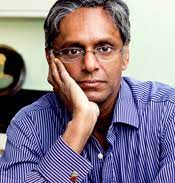 |
| Chandran Kukathas |
But here's a separate point: rights-talk may not be the best way to bring unconvinced people over to the libertarian view of the good society. Heresy? I hope not.
This video interview with Chandran Kukathas, author of The Libertarian Archipelago, got me thinking about this subject. Kukathas (whom I've written about here and here) starts with what ought to be obvious to everyone: people disagree about all kinds of things. As he writes in his book:
In a world of moral and cultural diversity one of the subjects over which there is dispute, and even conflict, is the subject of justice. Different peoples, or groups, or communities, have different views or conceptions of justice. In these circumstances the question is: how can people live together freely when there is this sort of moral diversity?"
Even when they agree on ends, they often disagree about the means to those ends. Disagreement is here, has always been here, and ain't going anywhere.
So what, you ask? What does that have to do with winning adherents to the libertarian view of the good society? It has a lot to do with it. Much modern libertarian thinking has been shaped by theorists who at least implied that the way to a free society is to get widespread if not universal agreement about rights and hence justice -- in other words, assent to a libertarian law code deduced from the nonaggression principle. (Some even think the agreement must extend to other philosophical matters like metaphysics, epistemology, ethics, aesthetics.) As a libertarian I came up (long ago) in that tradition. But now I wonder about its strategic, but not its truth, value.
If disagreement is and will be ubiquitous, how in hell can we hope for widespread agreement on a detailed code of law or rights theory? We can't hope for that, and we should stop acting as though we can because it looks to be a time-waster. It's been tried, so we must learn there are no magic words to do the trick.
Does that leave us in despair? Have we no hope for liberty? Maybe not. Chandran Kukathas gives us reason to hope.
Since broad disagreement is not going away, the most we can work for is an environment characterized as disagreement without conflict. I'm not a utopian. Conflict isn't going anywhere either, but it can be minimized through liberal institutions based on freedom of association within the current national territories, the "live and let live" principle, which would not require territory-wide agreement to a detailed doctrine. In other words, if we can't get universal agreement to a code of justice, how about to the principle of "mutual toleration"?
In this age of extreme and acrimonious polarization, doesn't that sound like a strategic approach worth pursuing? If no monopoly state is available, Group A won't have to live in fear that Group B will seize it and impose its preferences, and thus Group A won't have to seize the state apparatus first in self-defense.
Some may object to putting rights-talk on the shelf in favor of something less "pure." They may insist that in America, home of the Declaration of Independence with its stirring lines about inalienable rights that predate government, rights talk resonates as it does nowhere else.
That was my first thought. But then I remembered how the list of things that Americans are said to have a right to has grown exponentially over the decades. No one has been able to find the right incantation to stop, much less, reverse that growth. Believe me, many people have tried. And once you give flight to even legitimate rights-talk, you have no control over where it goes and what form it takes. Once "counterfeit rights" gain currency, we enter the realm of rights-balancing. And guess who's in charge of that.
So, Kukathas writes in The Liberal Archipelago, "The primary question of politics is not about justice or rights but about power, who may have it, and what may be done with it. Views about rights or about justice may have a significant bearing on any answer to this question, but this remains the important question."
As a consequence, Kukathas continues, "The principles of a free society describe not a hierarchy of superior and subordinate authorities but an archipelago of competing and overlapping jurisdictions." (Emphasis added. That is an extremely important adjective because it indicates that the authorities do not have monopolies even within "their" territories, suggesting a polycentric approach to law and governance.)
Kukathas clearly does not buy James Madison's famous line in Federalist 51: "In framing a government which is to be administered by men over men, the great difficulty lies in this: you must first enable the government to control the governed; and in the next place oblige it to control itself."
Thus those who value liberty must cultivate a distrust of power of all kinds. Kukathas says in the interview that the government is always a they that "co-opts us on a regular basis," and never a we. "In a free society ... only the freedom to associate is fundamental." The freedom of exit of course is the corollary.
As you might expect, Kukathas challenges the conventional view of what even constitutes the good society. He is "skeptical" about the need for "social unity," suggesting it
is not nearly as important as has been intimated. On the contrary, the good society is not something confined by the boundaries needed to make it one. Political authority is necessary in any good society; but political authority should be understood as something which has a place in the good society, rather than as something which circumscribes it.
In opposition to the body-politic metaphor, Kukathas offers a metaphor "of society as an archipelago of different communities operating in a sea of mutual toleration.... [T]he liberal archipelago is a society of societies which is neither the creation nor the object of control of any single authority, though it is a form of order in which authorities function under laws which are themselves beyond the reach of any singular power."
Importantly, he adds, "Implicit in this is a rejection of nationalism, and of the idea that we should start with the assumption that the nation-state is the 'society' which is properly the object of concern when we ask what is a free society."
Summing up in the interview, Kukathas says,
Having asked how can a diversity of peoples live together freely given their differences, [my theory] asserts that the answer lies in the way authority is allocated. More particularly, it argues that in a free society -- which is to say, a liberal society -- there will be a multiplicity of authorities, each independent of the others, and sustained by the acquiescence of its subjects. A liberal society is marked by respect for the independence of other authorities, and a reluctance to intervene in their affairs.
That reluctance would be reinforced by the fact that people who might like to control other people's peaceful conduct would have to pay out of pocket for the pleasure. They would not be able to socialize the cost by imposing it on a large number of otherwise indifferent taxpayers. The more something costs, the less people tend to buy. Call it libertarianism by default.
That seems like a vision that could win wide assent.
TGIF -- The Goal Is Freedom -- appears on Fridays.
Sunday, January 30, 2022
Free Speech -- What Is it Good for? Absolutely Nothing?
It is worth emphasizing that Enlightenment liberals have placed at the very top of their list of desiderata an institution explicitly intended to detect and correct their errors: namely, the free marketplace of ideas. By opposing free speech, the enemies of liberalism reveal that they can't even imagine ever needing correction, and they act accordingly, preferring smears to rebuttals.
Friday, January 14, 2022
TGIF: Utopianism May Be Hazardous to Your Health
Beware those who claim to have a detailed blueprint for the ideal society. If such a person thinks you stand in the way, you may get run over. That's how it is with utopians. They want everything just so, and woe betide those who disagree.
The repeated attempts at creating ideal societies haven't gone so well. To name just a few, see France 1789, Russia 1917, Italy 1922, Germany 1933, Eastern Europe 1945, China 1949, Cambodia 1976, Venezuela 1999.
The problem is that the architects of utopia have little tolerance for those who aren't wholeheartedly with the program. Any departure from the plan is a move away from the ideal. Dissenters must be dealt with.
In The Road to Serfdom, which still belongs on everyone's reading list, F. A. Hayek pointed out that a big problem with socialist or fascist central planning -- which is another way of saying utopianism -- is that regular people will assuredly upset the plan just by attending to their own lives -- so they cannot be left free to do so.
Hayek also noted that even if everyone agreed in principle that some kind of top-down social plan was desirable, they certainly would not agree on its details. In a world of scarcity, that would be a problem because everyone's preferences couldn't be accommodated. Moreover, Hayek went on, the endless debates over the plan could well give rise to a dictator who promised to stop the idle chatter and act decisively. So much for the promise of democratic planning.
Not everyone aspires to design their whole society. But some want to do something similar on a smaller scale. They seek to shape their local social environment (including their social-media environment) by expecting and insisting that everyone with whom they come into contact affirm their view of themselves and of how the world should be. One way to do this is to demonize and marginalize dissenters. While such micro-planning may seem largely harmless, it could have its risks as it gains momentum. Politics professor Eric Kaufmann, the author of Whiteshift, writes that the "principal threat to liberalism today is an emergent authoritarianism, not a top-down form of the kind we find in China or Turkey."
Intolerance toward dissenters can manifest itself in demands that we use language in novel and loaded ways favored by an interest group. This is often part of a utopian strategy to change government policy in oppressive ways. These days people can lose their jobs or access to online communities for using words (or having done so years before) in a newly forbidden manner.
But controlling language, which really means language users, is like herding cats. Language is a decentralized institution under no one's control. The meanings of words can change in their own time, but meanings are not determined by diktat. Most people will continue to speak as they are accustomed to speaking regardless of the activists' strident demands that we not only say, to use Orwell's example in Nineteen Eighty-Four, that 2+2=5 but also believe it.
Today's equivalents of 2+2=5 include: "The signs of a climate disaster are all around us and beyond debate"; "Sex is changeable or nonbinary or a social construct"; "Straight-white-cis-male supremacy explains all you'll ever need to know about Western civilization and contemporary American society"; and "Those who disagree with [name a group] are deplorable."
People should be free to believe those things if they want to, but they should also be free to disbelieve them and say so without fear of harassment, physical threats, or legal penalties. Those who know that 2+2=4 should inform the utopians that they have the burden of proving why anyone should pretend otherwise. "Gaslighting" needs cooperative victims.
A society, like a language, can't really be centrally planned, although the attempt will be lethal. The contrary idea gets encouragement from a misapplication of enlightenment principles. That the hard sciences can furnish the means to control natural forces, i.e., inanimate things, for the betterment of all is no reason for thinking that the social sciences can or should furnish the means to control social forces, i.e., people. Hayek called this misguided conviction scientism. No one has put the point better than Adam Smith in his other book, The Theory of Moral Sentiments:
The man of system [i.e., the central planner] ... is apt to be very wise in his own conceit; and is often so enamoured with the supposed beauty of his own ideal plan of government, that he cannot suffer the smallest deviation from any part of it. He goes on to establish it completely and in all its parts, without any regard either to the great interests, or to the strong prejudices which may oppose it. He seems to imagine that he can arrange the different members of a great society with as much ease as the hand arranges the different pieces upon a chess–board. He does not consider that the pieces upon the chess–board have no other principle of motion besides that which the hand impresses upon them; but that, in the great chess–board of human society, every single piece has a principle of motion of its own, altogether different from that which the legislature might chuse to impress upon it.
The alternative to utopianism, then, is Smith's "system of natural liberty" with its emergent, undesigned, and bottom-up order. Or in other words: individual sovereignty, free association, cooperation, competition, and contract.
So, people, believe what you want and recognize everyone else's right to the same freedom. Replace your divots! Don't be fragile -- be antifragile; in order for someone to give offense it is necessary that someone else take it. Don't be that someone. Don't look for your identity or life's meaning in what you take offense at.
Finally, let's each of us agree not to turn to the state to support "my tribe."
Friday, January 07, 2022
TGIF: National or Enlightenment Liberal Identity?
I find much to admire about Ayaan Hirsi Ali, the Somali-born Dutch-American scholar, author, and one-time politician who has drawn international attention to the violence against women and girls not only in Muslim-majority countries but also in the West at the hands of Muslim immigrants. Hirsi Ali escaped from a marriage arrangement and then became a pariah among Muslims, including her own family, and even the target of a murder conspiracy because of her public statements and writings, her break with Islam, and her collaboration with director Theo van Gough on the film Submission. As a result of the film, Van Gough was murdered in 2004.
Hirsi Ali is obviously intelligent, courageous, and nuanced. But of course that doesn't mean she doesn't get some important things wrong.
For example, while Hirsi Ali disagrees with how the U.S. government responded to what she regards as the "civilizational conflict" between the Islamic world and the West, she believes that the United States must engage in that conflict so as to "emerge out of it triumphantly."
In my view, she interprets a geopolitical conflict, which is the result of a century of Western imperialism, as a civilizational conflict. Yes, Muslim fanatics (often with the help of not-terribly-devout recruits, incidentally) have committed atrocities against innocent people, including other Muslims, and we should say so without hesitation or euphemism. But that doesn't mean we should overlook the crimes committed against innocent people in the Middle East by the U.S. government and its allies, including Israel. One thing that follows from this fact is that U.S. military intervention in Muslim-majority countries, which invariably kills innocents, is likely to drive people to more not less extreme forms of Islam. Hirsi Ali urges Muslims to undertake a reformation, but military force is a poor way to bring this about.
For the record, as a member of the Dutch parliament, Hirsi Ali voted to support the U.S.-led coalition in the war in Iraq, which she now apparently thinks was a mistake. She also says, "I think you just can't drone bad ideas out of people's heads," although she doesn't exclude drones as a means of persuasion. I urge readers to watch her Freedomfest discussion with Scott Horton and Abigail Hall Blanco of the "war on terror" in which Hirsi Ali's views on the nature of the conflict with Islam and the ability of the United States to engage morally and competently in a "war on terror" are subjected to a withering critique.
Let's move on to a related matter. In an interview on the Triggernometry program and podcast, Hirsi Ali wondered why immigrants raised in an Islamic culture, which she regards as inherently violent, would want to assimilate in a Western country that does not proudly embrace its own unique national identity. She makes a fair point when she says that the West has faltered not by acknowledging past sins such as slavery and imperialism, but by pretending that their past contains nothing but sins. The history of the West has much to admire thanks to enlightenment liberalism. Claiming otherwise seems little more than a fashionable and even nihilistic pose. Aggressive historical ignorance is never flattering.
But Hirsi Ali undercuts her point when she seems to claim that the people of Western countries ought to wear their unique national identities on their sleeves. Considering her embrace of enlightenment liberalism and its signature values -- reason, toleration, freedom of conscience, freedom of speech, private property, freedom of enterprise, privacy, etc. -- I would have thought that she'd be calling on the Western countries to stress their transcendent liberalism, not their unique local differences. I don't for a moment suggest that the unique features are unimportant, but only that for the purposes of acculturating immigrants from illiberal countries, they aren't the most important features.
National identity strikes me as identity politics writ large, grand blood-and-soil tribalism. But she doesn't see it that way. And while I favor decentralization, secession, and people's efforts to free themselves from distant and unaccountable rulers (such as Brexit), we ought to acknowledge that nationalism has a pretty poor record. (Hirsi Ali concedes this in the case of Germany.) A staunch nationalist is not likely to favor secession because the nation-state is taken at the sacred irreducible political unit. I'd guess that Hirsi Ai is a fan of Abraham Lincoln not only because he disapproved of slavery but also because he went to war, first and foremost, to prevent disunion.
While cosmopolitan enlightenment liberalism may be reconciliable conceptually with a benign, pacifistic version of nationalism (as Ludwig von Mises thought), whether it is likely in practice in our time is another matter entirely. These days nationalism -- Buy American! Protect American jobs! -- spawns trade protectionism, obsession with borders, and other measures that create friction between countries and risk the outbreak of war.
Enlightenment liberalism is appropriate to people everywhere because they are all human beings (even if incidental local customs vary from place to place). That, then, is what we in the West ought to be offering to -- but not imposing on -- non-Westerners. Meanwhile, we must undertake the reforms necessary to get the politicians to leave us alone. As for newcomers to the West, respect everyone's rights and get on with your lives.
Monday, August 31, 2020
Unpleasant Times

If Ludwig von Mises were alive today he would be viewing our current predicament with alarm but not surprise. He lived through something similar about a century ago.
In response to inexcusable police brutality, some outraged people who've taken to the streets have crossed the sacred line between peaceful protest and violence. Recent months have brought vandalism, arson, and injury in Kenosha, WI, and Portland, OR, and now intimidation of innocent bystanders in Portland and Washington, D.C. Now comes the ominous response.
This escalation by people who pose as friends of social justice (I don't doubt the sincerity of the nonviolent others in the streets) is both immoral and dangerous, both in its own right and also because it feeds those, like Trump, who might like nothing better than to bash a few heads before election day. Those among the protesters who perpetrate street violence are playing with fire, and they well know it, hoping that the state's reaction will serve their cause. But they are wrong. Whatever their cause, unless it's violence for its own sake, the result will be a strengthening of the worst aspects of the state--with the support of most people in the country.
Mises would have recognized what is going on because he'd seen it before. Have a look at chapter 10 of his book Liberalism, "The Argument of Fascism," for his observations in 1927 on what had taken place in Italy from about 1919 to 1922, when Mussolini took power and established a one-party dictatorship. That something even remotely similar to those events is now happening in America would have horrified and saddened him.
In that chapter Mises discussed the extended violent confrontation between communists/socialists and fascists in the streets of Italy. As the foremost champion of peace, freedom, and social cooperation (including economic exchange) of his day, Mises was horrified by the events. He noted that previously the antiliberal Italian right-wing nevertheless had reluctantly paid some slight homage to liberalism and its restraints on power, which it despised, because it was so central to Western civilization. But when the Italian Socialist Party began to achieve political success and make Bolshevik-type demands for fundamental social change, and when communists and socialist--emboldened by the state terror and mass murder in Russia--violently clashed in the streets with the right-wing "black shirts," Mussolini's budding fascist movement found their excuse to do what they had wanted to do all along: abandon token deference to liberalism, which it condemned as pacifist and weak, and embrace the so-called glory of violence without restraint. Mises wrote:
One must not fail to recognize that the conversion of the Rightist parties to the tactics of Fascism shows that the battle against liberalism has resulted in successes that, only a short time ago, would have been considered completely unthinkable. Many people approve of the methods of Fascism, even though its economic program is altogether antiliberal and its policy completely interventionist, because it is far from practicing the senseless and unrestrained destructionism that has stamped the Communists as the arch-enemies of civilization. Still others, in full knowledge of the evil that Fascist economic policy brings with it, view Fascism, in comparison with Bolshevism and Sovietism, as at least the lesser evil. [Emphasis added.]
Then Mises added, just so there would be no mistaking his meaning: "For the majority of its public and secret supporters and admirers, however, [Fascism's] appeal consists precisely in the violence of its methods." Fascism was antiliberal in every respect, Mises noted, including its nationalist and militarist foreign policy, which "cannot fail to give rise to an endless series of wars that must destroy all of modern civilization."
Mises pointed out that liberalism was not opposed to the use of violence when it was necessary to thwart violence. But again, to make sure he was understood, he quickly added:
What distinguishes liberal from Fascist political tactics is not a difference of opinion in regard to the necessity of using armed force to resist armed attackers, but a difference in the fundamental estimation of the role of violence in a struggle for power. The great danger threatening domestic policy from the side of Fascism lies in its complete faith in the decisive power of violence.
For Mises, the use of violence for the propagation of ideas was both wrong and counterproductive. Stifling the ideas of opponents gives them a credibility they might not otherwise earn: "Resort to naked force—that is, without justification in terms of intellectual arguments accepted by public opinion—merely gains new friends for those whom one is thereby trying to combat. In a battle between force and an idea, the latter always prevails."
He continued:
Fascism can triumph today because universal indignation at the infamies committed by the socialists and communists has obtained for it the sympathies of wide circles. But when the fresh impression of the crimes of the Bolsheviks has paled, the socialist program will once again exercise its power of attraction on the masses. For Fascism does nothing to combat it except to suppress socialist ideas and to persecute the people who spread them. If it wanted really to combat socialism, it would have to oppose it with ideas. There is, however, only one idea that can be effectively opposed to socialism, viz., that of liberalism.
I will next reproduce the controversial conclusion to Mises's chapter; if I don't, someone else will:
It cannot be denied that Fascism and similar movements aiming at the establishment of dictatorships are full of the best intentions and that their intervention has, for the moment, saved European civilization. The merit that Fascism has thereby won for itself will live on eternally in history. But though its policy has brought salvation for the moment, it is not of the kind which could promise continued success. Fascism was an emergency makeshift. To view it as something more would be a fatal error.
No liberal--libertarian, that is to say--can read this with joy, but it would be unfair to interpret Mises, as some have tried, as harboring even a speck of illiberal sentiment. (See his 1944 book Omnipotent Government: The Rise of the Total State and Total War for his view of, among others, Nazi Germany. Mises, whose heritage was Jewish, had to flee Austria and then Europe altogether because of Hitler.) Look at things from Mises's vantage point: he saw horrendous violent clashes in the streets and the looming threat of a Bolshevik state in western Europe draped in the garb of universalism and egalitarianism. (In contrast, militant Italian nationalism hardly had universal appeal.) Liberalism, unfortunately, was not on the agenda. So he had to decide which was the greater threat to Western civilization--which side if triumphant would have a smaller chance of surviving beyond the short run. Let's not forget who was on the socialist side: people who were inspired by Lenin and Trotsky, architects of the 20th century's first one-party terror state. So who can say Mises was wrong? I can't.
Of course we're not living in analogous circumstances. Notwithstanding increasing hyperbole from both wings of the establishment, we don't face a choice between Bolshevism and fascism, although I am aware of Trump's authoritarian disposition and Biden's devotion to the all-service state. Still, it's too close for comfort. We now are now seeing violent street confrontations--and the potential for bystander casualties--between two sides each with a predilection for violence, even if neither one has a fleshed-out program. (Apparently, the clashes are an all-white affair.) If things get further out of hand, the public will likely and reasonably demand a restoration of order, and many in power will be only too happy to comply--and then some. What will come next?
I don't want to exaggerate--the worst incidents have been confined to a few cities--but I fear for the future.



