Friday, December 30, 2005

Spooner Had It Right


The defenders of George II say he has, and always has had, the power to conduct warrantless eavesdropping on American citizens during “time of war.” They cite court opinions to that effect. His critics downplay the court opinions and say he has violated the law and the Constitution. It seems pretty clear that the president will get away with it. Thus the words of Lysander Spooner in No Treason come to mind:
But whether the Constitution really be one thing, or another, this much is certain—that it has either authorized such a government as we have had, or has been powerless to prevent it. In either case, it is unfit to exist.

Postscript: One legal scholar and Bush critic who puts the past court rulings in context and shows how the president has violated the law is Robert Levy of the Cato Institute. Here is an interesting exchange between Levy and a Bush defender (pdf).

Hat tip: Will Wilkinson.

Separate Science and State

The state ought to be separated from many things (or just one: reality), but I can see nothing more urgent than to separate science and state. No better example of the corrupting hand of politics is to be found. Lives hang in the balance. On this matter, see the latest article by Patrick Michaels.

Some School Choice

Roy Cordato of the John Locke Foundation confirms the suspicions of those of us who see “school choice” (aka vouchers and tax credits) as the road to the ruin for currently (quasi)independent schools. In Florida, school-choice advocates, in a bid for support, have lobbied the state legislature for “accountability legislation” for schools that participate in a corporate tax-credit program. This sort of thing has happened elsewhere. So far the efforts have failed.

Interestingly, the article that Cordato bases his post on points out that associations of private schools are in the coalition lobbying for government standards. The article says, “Among the coalition's accountability recommendations are required standardized testing for tax credit scholarship recipients and teacher qualification requirements that allow for formal education or special knowledge of the subject.” Do you suppose that part of the motive is to crush private schools that are less able to withstand the bureaucratic impositions?

See Cordato’s post here.

(Cross-posted at Liberty & Power.)

Thursday, December 29, 2005

An Antiwar Column to See

David Henderson, the economist and my friend, writes an excellent column on Antiwar.com. I’m a little behind, but his Nov. 28 column, "Adam Smith's Economic Case Against Imperialism," is worth reading.

P.S: Also check out "Who Is 'We'?"

"Free Election": A Contradiction in Terms?


The UN says the Iraqi election was fair. But hasn’t it overlooked a rather large consideration? Everyone who voted did so under duress; that is, everyone was threatened with government domination—taxation, inter alia—whether or not he or she voted. Thus the decision to participate in the election was hardly a free choice. “Free election” makes as much sense as "square circle." Or “paid vacation.” Or “military intelligence.”

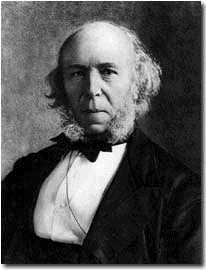
Which reminds me of Herbert Spencer's point in Social Statics (Chapter XIX, §5, "The Right to Ignore the State") to the effect that in conventional thinking, no one is justified in complaining about the outcome of an election. If you voted for the winner, you obviously can't complain. If you voted for the loser, well, you knew you might lose when you voted. And if you didn't vote? Well, if you chose not to take part, how in hell can you complain now? Says Spencer: "So, curiously enough, it seems that he gave his consent in whatever way he acted—whether he said yes, whether he said no, or whether he remained neuter! A rather awkward doctrine this."

(Cross-posted at Liberty & Power.)

Wednesday, December 28, 2005

Who Are You Going to Believe?


The revelations about the Bush administration’s warrantless eavesdropping have sparked a debate about whether we can trust the government. But what’s to debate? We already know the answer. A few years ago there was an outcry against Total Information Awareness, a Pentagon project headed by Iran-Contra veteran John Poindexter that was set up to sweep through huge volumes of e-mails and other electronic information fishing for patterns suggestive of terrorist planning. The civil-liberties threat was obvious, and because of the protest, the administration said it would shut down the program. Now we know that although the office was shut down and Poindexter departed, a similar function has remained in operation, with the help of major telecommunications companies. According to the New York Times, the government, despite its earlier assurances, has been mining data like gangbusters. So who are you going to believe, them or your eyes?

More Drug-War Victims

My op-ed about Cory Maye, "More Drug-War Victims," is posted at The Future of Freedom Foundation website.

Tuesday, December 27, 2005

The Mystique of Democracy

My letter to the editor was published December 11 in the Arkansas Democrat-Gazette:
The Arkansas Democrat-Gazette is more propagandist than objective news source when it reports that “North Little Rock voters approved a two-year, 1-percent city sales tax Aug. 9 to pay for the [new Travelers] ballpark. . . .”

Unless the vote was unanimous, this sentence is misleading. What it should have said is that some voters who want a new ballpark voted to force others who do not want it to help pay for it anyway.

Voting results are never reported this way because it would reveal democracy to be mob rule rather than a system that respects individual rights and freedom. It has been said that democracy is based on a strange arithmetic: 50 percent plus one equals 100 percent, while 50 percent minus one equals zero. Is this what we want to give the rest of the world? And why can’t baseball stadiums be left to the private marketplace?

Has Business Ever Met A Business Subsidy It Didn't Like?

“[T]he free market does not exist. In every nation the corporations hold out their begging bowls and tax-payers line up to fill them. We are the ragged-trousered philanthropists of the 21st century, the comparatively poor obliged to sponsor the rich.”

This is some of what George Monbiot had to say in the Guardian of December 13. Advocates of the free market must begin to pay as much attention to corporate welfare as we do to other forms of welfare, which often are miniscule compared to the business variety.

Read more here.

Hat tip: Larry Gambone at Porcupine blog

Security vs. liberty?

Tom Knapp provides a succinct response to the claim that under current circumstances we must sacrifice some liberty for security. Read it here.

Monday, December 26, 2005

Blind Faith

In his Dec. 17 radio address George II defended his authorization of warrantless eavesdropping on domestic phone calls and e-mails by the secretive National Security Agency, claiming his constitutional status as commander-in-chief and the post-9/11 congressional resolution on force bestow such power on him. In trying to quiet any concerns, he assured us that before such eavesdropping is resorted to, “the government must have information that establishes a clear link to these terrorist networks.” As a further safeguard, he said, “The activities I authorized are reviewed approximately every 45 days. . . . The review includes approval by our nation's top legal officials, including the Attorney General and the Counsel to the President.”  Further, he said, “The NSA's activities under this authorization are thoroughly reviewed by the Justice Department and NSA's top legal officials, including NSA's general counsel and inspector general. Leaders in Congress have been briefed more than a dozen times on this authorization and the activities conducted under it. Intelligence officials involved in this activity also receive extensive training to ensure they perform their duties consistent with the letter and intent of the authorization. . . . The American people expect me to do everything in my power under our laws and Constitution to protect them and their civil liberties.”

This may sound impressive—until you remind yourself that all these purported safeguards are conducted by the president and his small circle of advisers. So what if this group reviews its own conduct every 45 days, assuming it even does that? Bush says the targets are linked to terrorists. But how do we know that? Hasn’t this administration gathered information on anti-war activities and PETA? As for those congressional briefings, I’m afraid that throwing bits of information to a couple of congressmen who can’t even consult their legal advisers, much less tell the public, just doesn’t cut it. All Senator Rockefeller could do was write a private letter of concern to Vice President Cheney. I’m not reassured.

The upshot is that the president claims he has the power to spy on anyone he deems an appropriate target and that no oversight from the judicial or legislative branch, much less the public, is required. He’s asking for blind faith that he will not violate our civil liberties. But he already has.

Thomas Jefferson said, “Free government is founded in jealousy, and not in confidence; it is jealousy and not confidence, which prescribes limited constitutions, to bind down those whom we are obliged to trust with power.” Mr. Jefferson would not recognize America today.

It's Good to Be the King

Former Secretary of State Colin Powell says he sees “absolutely nothing wrong with the president authorizing” eavesdropping on domestic phone calls and e-mails without first getting warrants (New York Times). But he also says that George II would have had no problem getting warrants had he asked for them.

When a president finds the rubber-stamp process of the FISA court too onerous, you’ve got to wonder if something else is going on. As Mel Brooks said, “It’s good to be the king.”

(Cross-posted at Liberty & Power.)

Sunday, December 25, 2005

Cory Maye Transcript Posted

Radley Balko has posted the transcript from the trial of Cory Maye.  Read it here. Kudos to Radley!

Remembering Karl Hess

Brad Spangler has posted a wonderful list of quotations from Karl Hess, picked up from this 2003 Gary Galles article on the Mises.com website. I am honored to have known Karl, and I learned much from him in the late 1960s and 1970s. He was the warmest person I’ve ever met. Get to know him through his writings.

The Market Is a Tough Thing to Squelch

The Corporate State--Nock's merchant-State--is real, but that doesn't mean it has totally blunted the forces of the market and prevented challengers from succeeding. The Washington Post published a story Dec. 22 showing that Microsoft, despite all its advantages in the rigged marketplace, is under pressure on several important fronts. Software applications will increasingly be available through the Internet (see Writely.com, which I used to write this), enabling users to avoid Microsoft products. Thus programs are being developed, the Post reports, "that are deliberately not oriented toward Microsoft." Mozilla's open-source Firefox browser and Thunderbird e-mail client are already hits and getting bigger all the time. As the Post put it: "Its [Microsoft's] financial growth is slowing--in the single digits in sales growth for fiscal 2005 over the previous year, for the first time in the company's history--and its stock has been flat for five years. It missed some of the most popular technology advances in recent years, such as searching the Internet and downloading music." Companies putting pressure on Microsoft, such as Google and Yahoo, didn't exist a few years ago. Of course, Microsoft itself started from nothing, as did Apple, Dell, and countless others. IBM was supposed to have made them impossible. Antitrust law is superfluous, although that is the least one can say about it.

The point is that for all the benefits the merchant-State bestows on today's insiders (copyright, patents, regulations, taxes, trade barriers, etc.), they are not so formidable that they can keep all outsiders out. No one person or group can foresee all crucial coming events or anticipate what consumers will want, perhaps least of all state-sheltered firms that feel safe and complacent. Microsoft is showing signs of the clumsy, stumbling One Big Company that Murray Rothbard wrote about. The Post quotes management consultant Peter Cohan: "It's become a big, bureaucratic organization." Of course, not everyone agrees.

Does this mean the merchant-State does no harm? No, it does much harm. It makes it harder for challengers to get started and to succeed, reducing options for consumers and workers. But we shouldn't overstate its power. The market is a tough thing to squelch.

Saturday, December 24, 2005

Is There Any Intelligence at All Out There?

My friend Gene Callahan is always interesting. His two recent articles on intelligent design vs. evolution are here and here. Enjoy!

Free-Market Anti-Capitalist

Kevin Carson, the free-market anti-capitalist, has a consistently interesting and context-broadening site, The Mutualist. Here's a good illustration of why I say that. (Follow the links!)

USA Patriot Act: Whatever It Is, I'm Against It

No self-respecting person could ever support anything called the USA PATRIOT Act.* Its blatantly Orwellian acronymous title could have only one purpose: to stifle dissent before it begins.

*Uniting and Strengthening America by Providing Appropriate Tools Required to Intercept and Obstruct Terrorism

The All-Powerful Need No More Power

Robert Levy of the Cato Institute had a good comment about the warrantless eavesdropping the Bush administration is engaging in. George II says the power to spy on Americans without warrants is contained in both his constitutional commander-in-chief authority and the post-9/11 congressional authorization to use force against terrorists. Levy comments:
That pernicious rationale, carried to its logical extreme, renders the PATRIOT Act unnecessary and trumps any dispute over its reauthorization. Indeed, such a policy makes a mockery of the principle of separation of powers.

I Beg to Differ

Contrary to George II, voting isn't freedom. Freedom is staying out of the clutches of voters.