Showing posts with label therapeutic state. Show all posts

Wednesday, April 15, 2020

The Szasz Centennary

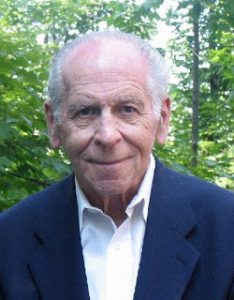
Szaszpix2 


Today is the 100th anniversary of the birth of Thomas S. Szasz (1920-2012), the most unappreciated libertarian in modern times. Beginning with his book The Myth of Mental Illness in 1961 and proceeding through dozens of books and hundreds of articles, Szasz, a Hungary-born physician and psychiatrist, spent more than half a century analyzing and debunking the myriad violations of individual liberty committed in the name of health, public health, and mental health. He dubbed the union of government and medicine The Therapeutic State.

In this cause, Szasz, who was also a historian and philosopher, not only documented the many ways in which the so-called mentally ill have been persecuted, imprisoned (involuntarily hospitalized), and tortured (drugged, lobotomized, electroshocked, etc.), he also demolished the establishment's case for the oppression and so-called "treatment" of recreational drug consumers, sellers, and manufacturers; homosexuals; would-be suicides; and other officially disapproved persons. No one was better at exposing the horror of the "war on drugs" -- it's a war on people not drugs, of course -- than Szasz. And keep in mind that when he defended the liberty of gays and lesbians, psychiatry still listed homosexuality as a mental illness. (Organized psychiatry voted [sic] it off the list in the 1970s.)

Most relevant to the world today, Szasz insisted on the traditional liberal distinction between personal health and public health, specifically, between conditions that may be harmful only to oneself and conditions that may be harmful to others, such as through a serious, contagious disease. He objected to the illiberal blurring of that line, which has justified interventions against people who have not harmed others and could not do so by, say, breathing on them. No one, Szasz wrote, has the right to declare someone else a patient -- whether sick or not -- against his will.

Many libertarians have ignored Szasz, who was my friend and mentor, because they have regarded psychiatry as beyond their expertise. But they missed the point. Szasz insisted that  libertarian principles pertain even to people who are stigmatized by the medical establishment, which has long been deputized by the state. Until someone threatens to harm or actually harms another person, the state should leave him alone.

Pick up any book by Szasz, including his collections of aphorisms, and you'll profit immensely. He was a wonderful writer and a fascinating thinker. You can find a list of his writings here. Lots more information is available at the Thomas S. Szasz Cybercenter for Liberty and Responsibility. See my post "Szasz in One Lesson" here. Other posts that I've written over the years are here, here, and here. Also see Jacob Sullum's interview here and Jim Bovard's appreciation here.

And the biggest treat of all is this video interview I did with Tom in 2005.

Sunday, April 15, 2018

Thomas Szasz: An Appreciation


Thomas Szasz (sass), the most underrated libertarian in modern times, was born this day in 1920 in Budapest, Hungary. He came to the U.S. at 18 and died in 2012. A psychiatrist by training and a practicing therapist and professor, Szasz was the world's leading critic of organized psychiatry and its coercive powers (involuntary commitment, forced drugging, etc.), as well as the most incisive opponent of drug prohibition and, generally, of what he called the "therapeutic state." He opposed political power because he believed in self-ownership, individual liberty, and human dignity.

Szasz burst on the scene nearly 60 years ago with his pathbreaking book, The Myth of Mental Illness, which argued that the mind, not being an organ, cannot be diseased; thus the term "mental illness" is a category mistake. What is stigmatized by that "diagnosis" is the "patient's" behavior that disturbs someone else. The switch from "mental illness" to "brain disorder" did not change the fact that what is typically bothersome is behavior (which may indeed be objectionable and even coercive). The attribution of such behavior to a brain state is an unproven and even unprovable inference. Human action has reasons, not causes, Szasz would say.

At Amazon.com you'll find a cornucopia of books demolishing the case for the state's deputization of physicians, particularly psychiatrists. A good book to start with is Insanity: The Idea and Its Consequences, his magnum opus. You should also search his name at FEE.org for the columns he wrote while I edited The Freeman.

Meanwhile, to get a sense of what Szasz was about at the deepest level, see my "Szasz in One Lesson" and watch this interview I did with him.

Monday, September 24, 2012

My Interview with Thomas Szasz

In the summer of 2005 I traveled to Thomas Szasz's home in Manlius, New York, and videoed an interview with the great critic of coercive psychiatry and the "therapeutic state."

Friday, March 13, 2009

The Therapeutic State

From the Associated Press:

EASTON, Pa. - A man accused of driving drunk said Pennsylvania courts have no jurisdiction over him because he’s his own country. After seeing the paperwork that 44-year-old Scott Allan Witmer filed with the court claiming sovereignty, a Northampton County judge said Tuesday he cannot be released from jail until he gets a mental exam. [Emphasis added.]

Reminds me of how psychiatry was used in the old Soviet Union.

Cross-posted at Anything Peaceful.

Friday, May 25, 2007

Be Our Guest (Worker)

The so-called guest-worker program, part of the controversial new compromise immigration bill now before Congress, sums up everything that is wrong in how many people think about immigration. On one side are those who want to keep foreigners out of the country on grounds that they will compete against American workers without providing offsetting benefits to the U.S. economy. On the other are those who want to admit some magic number of the right kind of foreign workers because it will benefit the U.S. economy. While they sling endless econometric studies at each other, some of us wonder: What about freedom? That question may seen quaint in the Age of Scientism, when economists and other practitioners of social science assume the role of high priests, but it's still worth asking, because a tower of statistical studies showing adverse effects on wages does not trump individual rights.
The rest of this week's TGIF column, "Be Our Guest (Worker)," is at the Foundation for Economic Education website.

Tuesday, April 24, 2007

"Dangerousness Is Not a Disease"

Thomas Szasz's take on the Virginia Tech shooting is here at the Foundation for Economic Education website.

Cross-posted at Liberty & Power.